

When people hear affiliate marketing, they often imagine the exciting part first.
A website.
Affiliate links.
Traffic.
Commissions.
Maybe, eventually, that wonderfully satisfying notification that someone bought something through your link.
But there is a less glamorous side of building an online business that doesn’t fit neatly into a flashy social media post.
You have to learn.
You have to experiment.
You have to write content when nobody seems to be reading it.
You have to understand your audience.
You have to figure out SEO.
You have to make mistakes.
And then you have to look at those mistakes, learn from them, and keep going.
That is where platforms such as Wealthy Affiliate become interesting.
For me, the bigger lesson isn’t simply how to do affiliate marketing.
It’s learning what actually goes into building something online.
1. An Online Business Doesn’t Appear Overnight
One of the biggest misconceptions about online business is that you can put something online today and expect results tomorrow.
Technically, you can.
Reality has other plans.
Building a website is only the beginning. You still need content, an audience, visibility, a strategy, and a reason for people to come back.
Wealthy Affiliate introduces beginners to many of those moving parts rather than presenting affiliate marketing as simply:
Find product → add link → make money.
If only it were that easy.
The real process is much more like:
Learn → build → publish → test → improve → repeat.
That isn’t nearly as glamorous, but it is far more realistic.
2. Your Website Is More Than a Place for Affiliate Links
An affiliate website shouldn’t feel like a digital catalogue.
People don’t visit a website because they desperately want to encounter seventeen affiliate buttons.
They visit because they have a question, problem, curiosity, interest, or goal.
That’s why content matters.
Your website needs to give people something useful before asking them to click anything.
A good affiliate article might help someone compare products, understand a complicated topic, solve a problem, or make a decision.
The affiliate link becomes part of the solution rather than the entire purpose of the page.
That distinction changes everything.
3. You Have to Learn Your Audience
You can have an excellent product and still create terrible marketing if you don’t understand the people you’re speaking to.
Who are they?
What are they searching for?
What problems are they trying to solve?
What questions do they have?
What would make them trust your recommendation?
These questions are far more important than simply asking:
“How do I get people to click my link?”
The better question is:
“How can I make this useful to the person reading it?”
Once you start thinking that way, affiliate marketing becomes less about pushing products and more about helping people make informed decisions.
4. SEO Is a Long Game
SEO is another lesson that becomes very obvious when building an affiliate website.
You can publish something today and receive very little traffic.
That doesn’t necessarily mean the article failed.
Search engines need time to discover, understand, and evaluate content. Your website also needs time to establish authority and build a library of useful information.
This is why creating one article and immediately checking your traffic every five minutes can become an emotional rollercoaster. 🎢
SEO rewards patience.
It also rewards learning.
You start understanding search intent, keywords, internal linking, content structure, and the difference between writing for a search engine and writing for an actual human.
And that last part matters enormously.
5. Consistency Doesn’t Mean Publishing Mindlessly
There’s a difference between being consistent and simply producing content for the sake of having something published.
You don’t need to flood your website with articles nobody needs.
Consistency should mean continuing to build, learn, improve, and show up.
Sometimes that means publishing.
Sometimes it means updating an old article.
Sometimes it means researching your audience.
Sometimes it means looking at what isn’t working and changing your approach.
Building an online business isn’t a content-production competition.
It’s a process of improvement.
6. You Learn by Actually Doing
One thing that can be underestimated when learning digital marketing is the difference between understanding something theoretically and actually doing it.
You can read ten articles about SEO.
Then you try to optimise your own article and suddenly realise there are approximately 47 things you didn’t understand. 😂
That’s normal.
Building gives you context that theory alone can’t provide.
You start noticing patterns.
You make decisions.
You see what happens.
You adjust.
Then you try again.
That hands-on process is where a lot of the real learning happens.
7. Not Everything You Try Will Work
This might be one of the most important lessons of all.
Some content will perform well.
Some won’t.
Some ideas will look brilliant on paper and completely flop once they’re published.
Some strategies will work for somebody else and make absolutely no sense for your audience.
That’s not necessarily failure.
It’s information.
Digital marketing involves experimentation.
The goal isn’t to create a perfect strategy on the first attempt.
The goal is to become better at recognising what works for your audience, your website, and your business.
8. Trust Is More Valuable Than a Click
Affiliate marketing can become very transactional if you’re not careful.
Click here.
Buy this.
Use my link.
Limited offer.
But trust is what makes someone actually value your recommendation.
If a reader believes you’re genuinely trying to help them, your content becomes more powerful.
You don’t have to pretend every product is perfect.
You don’t have to recommend something simply because it offers a commission.
Sometimes being honest about the downsides makes your recommendation more credible.
A trustworthy affiliate marketer isn’t thinking:
“How can I get this person to buy?”
They’re thinking:
“Would I genuinely recommend this to them?”
That difference matters.
9. Your Personality Is Part of Your Brand
This is something I particularly believe in.
There is already an enormous amount of generic content online.
If every website sounds like it was written by the same marketing textbook, readers have very little reason to remember one website over another.
Your perspective matters.
Your experiences matter.
Your way of explaining things matters.
Even your weird ideas matter.
That’s one reason I don’t think digital marketing needs to be completely polished and corporate all the time.
People connect with people.
A brand can be strategic without becoming robotic.
10. Building an Online Business Is a Skill, Not a Shortcut
Ultimately, what Wealthy Affiliate can teach you isn’t simply how to create an affiliate website.
It can teach you how many different skills sit underneath an online business.
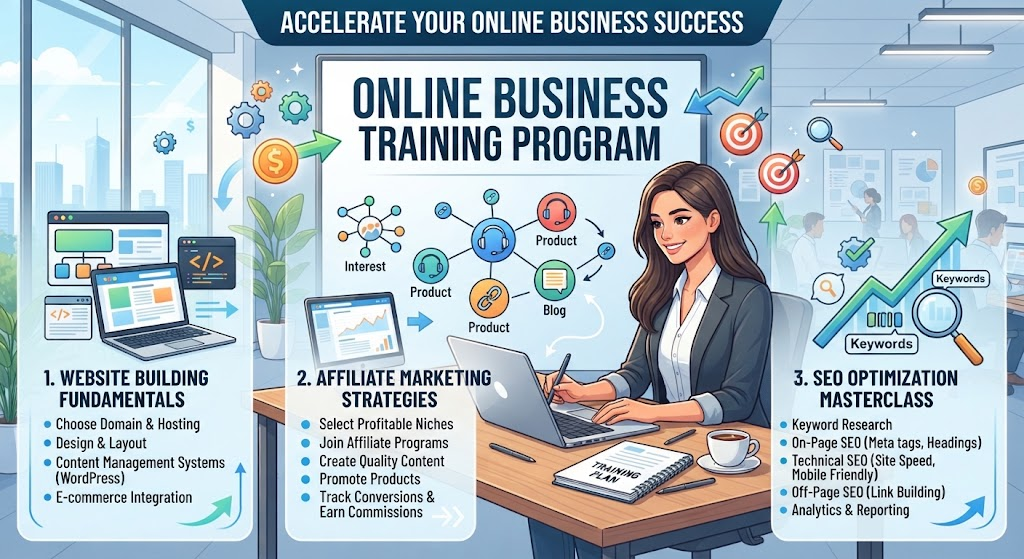
You begin touching areas such as:
- Website building
- SEO
- Content creation
- Affiliate marketing
- Keyword research
- Audience research
- Digital marketing
- Branding
- Conversion strategy
- Analytics
- Content planning
And those skills extend far beyond affiliate marketing.
They can become useful for freelancing, blogging, content creation, ecommerce, personal branding, consulting, and other digital projects.
That’s why I think it’s more useful to view affiliate marketing as a learning vehicle rather than a magic income button.
The Bigger Lesson
Building an online business teaches you something that no income screenshot can really demonstrate.
You have to build something worth finding.
You need something useful.
Something trustworthy.
Something recognisable.
Something that solves a problem or gives people a reason to stay.
Wealthy Affiliate can provide the education, tools, community, and framework to help you learn those fundamentals.
But the platform can’t build your business for you.
That’s still your job.
And honestly?
That’s probably a good thing.
Because the most valuable part of building an online business isn’t simply getting the first commission.
It’s eventually looking at what you’ve built and realising:
“I actually know how to do this now.”
That’s the point where you’re no longer just following a tutorial.
You’re becoming a marketer.
You’re becoming a strategist.
You’re building something that belongs to you.
And that is a much bigger win than a single notification on your phone. 📈
Final Thought

Affiliate marketing isn’t a shortcut around learning business.
It is one way of learning business.
And that’s the lesson worth carrying forward.

Leave a Reply