
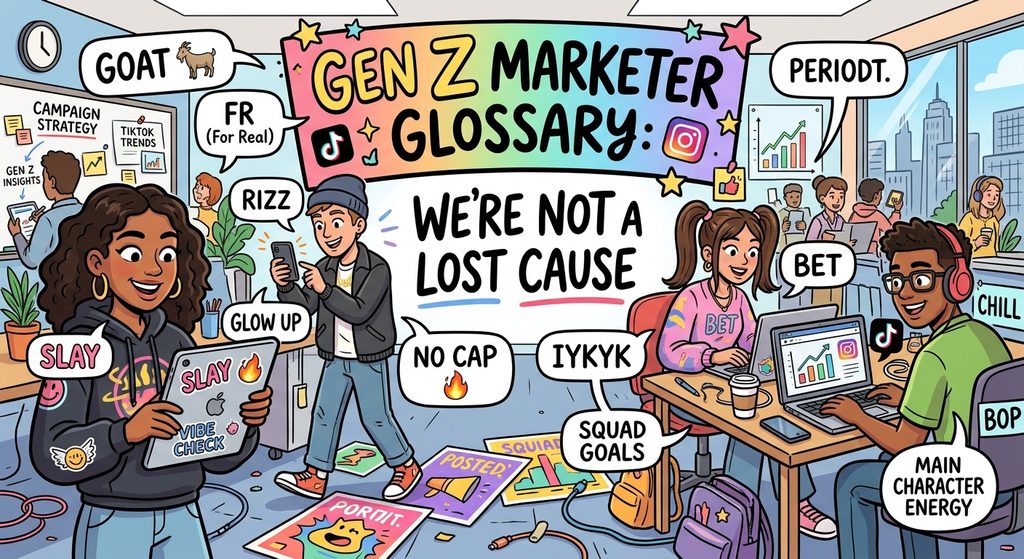
Marketing to Gen Z is not about throwing a few TikTok references into a campaign and calling it a day.
It’s about understanding how this generation discovers information, interacts with brands, uses technology, and decides what deserves their attention.
Gen Z has grown up surrounded by social media, smartphones, AI tools, fast-moving trends, visual content, and increasingly personalised digital experiences. That has changed what they expect from brands and websites.
For marketers, that means the old “create it, publish it, promote it” formula is no longer enough.
Gen Z Wants Experiences, Not Just Content
A website can technically work perfectly and still feel completely disconnected from its audience.
Gen Z notices design, navigation, tone, visuals, speed, accessibility, and overall experience almost immediately.
This is where UX becomes part of marketing rather than something that sits separately from it.
A good Gen Z-focused website should feel intuitive, visually engaging, mobile-friendly, and easy to explore. From interactive elements to 3D web experiences, modern websites are becoming more immersive.
But there is a catch.
Design should enhance the experience, not become the experience.
A beautiful website that takes forever to load or makes users hunt for basic information is still a bad website.
SEO Is Changing Too
Gen Z does not only search through traditional search engines.
People discover information through social platforms, communities, videos, forums, AI tools, and increasingly conversational search.
That means SEO needs to move beyond simply targeting keywords.
Content needs to answer real questions, demonstrate experience, provide useful context, and make sense to humans first.
Search visibility is becoming less about “How many times did we use this keyword?” and more about “Did we actually help someone?”
AI Is Part of the Workflow
AI is becoming increasingly common in marketing workflows, from brainstorming and research to content structure, optimisation, and idea generation.
But using AI does not mean removing humans from the process.
The strongest approach is collaboration.
AI can help marketers work faster and explore ideas, while human judgement adds personality, context, creativity, ethics, and the perspective that makes content feel intentional.
For Gen Z audiences especially, authenticity matters.
If everything feels automated, polished into oblivion, and emotionally empty, people notice.
Trust Still Matters
Gen Z is growing up in an internet where deepfakes, AI-generated content, influencer marketing, sponsored posts, misinformation, and algorithmic recommendations are normal parts of the digital environment.
That makes transparency increasingly important.
Marketers need to be clear about what they are offering, how they use technology, and where their content comes from.
Trust is not just a branding exercise.
It is part of the user experience.
The Gen Z Marketing Mindset
If I had to simplify Gen Z marketing into a few principles, they would be:
- Make it useful.
- Make it easy to navigate.
- Make it visually engaging.
- Respect people’s time.
- Use AI responsibly.
- Build for humans, not just algorithms.
- Give people a reason to trust you.
- Let the brand have an actual personality.
Gen Z marketing is not about trying to sound young.
It is about understanding how modern audiences actually interact with the digital world.
And honestly, marketers do not need to become Gen Z overnight.
They just need to stop treating Gen Z like a demographic they can decode with a checklist.
We are not a marketing puzzle.
We are the people using the internet you are trying to market through.
That distinction matters.

Leave a Reply