


Can AI content capture human nuance? On the surface, often yes: the sentences are smooth, the tone is warm, and the structure is tidy. What goes missing is harder to see, because it was never in the sentences. It was in a set of decisions made before anyone typed a word, and those are the decisions most workflows now hand to a tool without anyone noticing.
This piece looks at which decisions those are, where automation helps, and where a person has to stay responsible.
The flat-content problem is really a decision problem
The usual diagnosis of flat AI writing blames the model: it’s generic, it’s bland, it averages everything out. That description is accurate as far as it goes, and I covered the editing side in Why AI Written Content Fails (and the Edit That Fixes It). But editing fixes sentences. Flatness usually starts earlier, with a brief that never made a choice.
Give a model a topic, an audience label like “Gen Z marketers” and a tone like “friendly but professional,” and it will produce the most statistically comfortable version of that request. That is what it was built to do. The output is flat because the input contained no decisions, so the model had nothing to be specific about.

Seen this way, the question changes. Asking whether the model is good enough points at the tool. Asking which decisions you made before generating, and which you let the tool make for you, points at the workflow, which is the part you control.
What nuance actually is: five judgement calls a model can’t make for you
Nuance reads like a quality of prose, but it is better understood as the visible result of choices. Five of them matter most.
1. What to leave out. A nuanced piece is defined as much by what it skips as by what it covers. Leaving out a true but distracting point is an editorial position. A model asked to be thorough will include everything plausible, because nothing tells it what this reader doesn’t need.
2. What to risk. Every memorable line is a claim someone could disagree with. A model tuned to be helpful and agreeable drifts toward statements nobody could object to, and those are the ones nobody remembers. Deciding which claim you will defend, and what it might cost you, belongs to you.
3. Who you’re talking to. “Aspiring marketers” is a category, not a reader. A real reader has a particular level of knowledge, a particular worry, and a particular thing they already believe that you may need to gently contradict. Unless you supply that, the model writes for the average of everyone.
4. When to say it. The same advice lands differently the week a platform changes its rules, after a brand controversy, or on a quiet Tuesday. Timing is context, and context comes from paying attention to what your audience is dealing with right now.
5. What you can vouch for. Specific detail is what makes writing feel lived in: the example you’ve seen, the number you checked, the objection a client actually raised. A model can produce text shaped like specifics, but it cannot know which specifics are true. Only the person publishing can vouch for them, and that is why invented detail is the most dangerous thing automation produces.
None of the five is a writing skill. They are the choices a strategist makes, which is why nuance doesn’t disappear when you use AI. It disappears when you stop making these choices.
Where AI genuinely helps storytelling, and the honest limits of that help
Plenty of storytelling work is execution, and AI is useful there once the decisions are made.
- Structure options. Ask for three ways to order an argument you’ve already settled. Choosing among them is still your call, but seeing alternatives is quick.
- Stress-testing. Ask it to argue against your main claim, or to list what a skeptical reader would say. It can surface objections you hadn’t considered.
- Reformatting. Turning an approved article into a newsletter summary or a set of social captions is mostly mechanical, as long as the original argument stays intact.
- Cleanup. Tightening a paragraph, catching repetition and checking that terms are used consistently all save time without changing what you mean.
- Research gathering. A model can point you toward where to look, but every factual claim it produces needs checking against a real source before it appears in your work.
The limits are just as concrete. A model has no stake in your reader’s trust, and it has no memory of what your audience reacted to last month unless you put that in front of it. It also tends to resolve tension rather than hold it, wrapping up an uncertain point with a tidy conclusion. Real stories often need the opposite: a question left open, or an admission that the evidence is mixed.
The quiet handoff: how nuance leaks out of a workflow one shortcut at a time
Nobody decides to automate their judgement. It moves across in small, reasonable-looking steps, each of which saves ten minutes.
The first outline becomes the outline. Asking a model for a structure is fine. Accepting the first one means it decided what the article covers and, more importantly, what it doesn’t.

The tone prompt becomes the voice. A line like “write in a conversational, engaging tone” gets reused across every piece. Eventually the brand sounds like the prompt rather than like anyone, which is one route to the sameness I looked at in Why Every Brand Sounds the Same (And It’s Not an Accident).
Audience research becomes a summary. When a tool condenses comments, reviews or survey answers, the odd phrasing and the surprising complaint are usually the first things to go. Those are often the most useful material for writing something that sounds like it was written for a person.
The headline and hook get generated. These are the highest-leverage lines in a piece and the ones where taking a risk matters most. They are also the lines most often outsourced because they feel small.
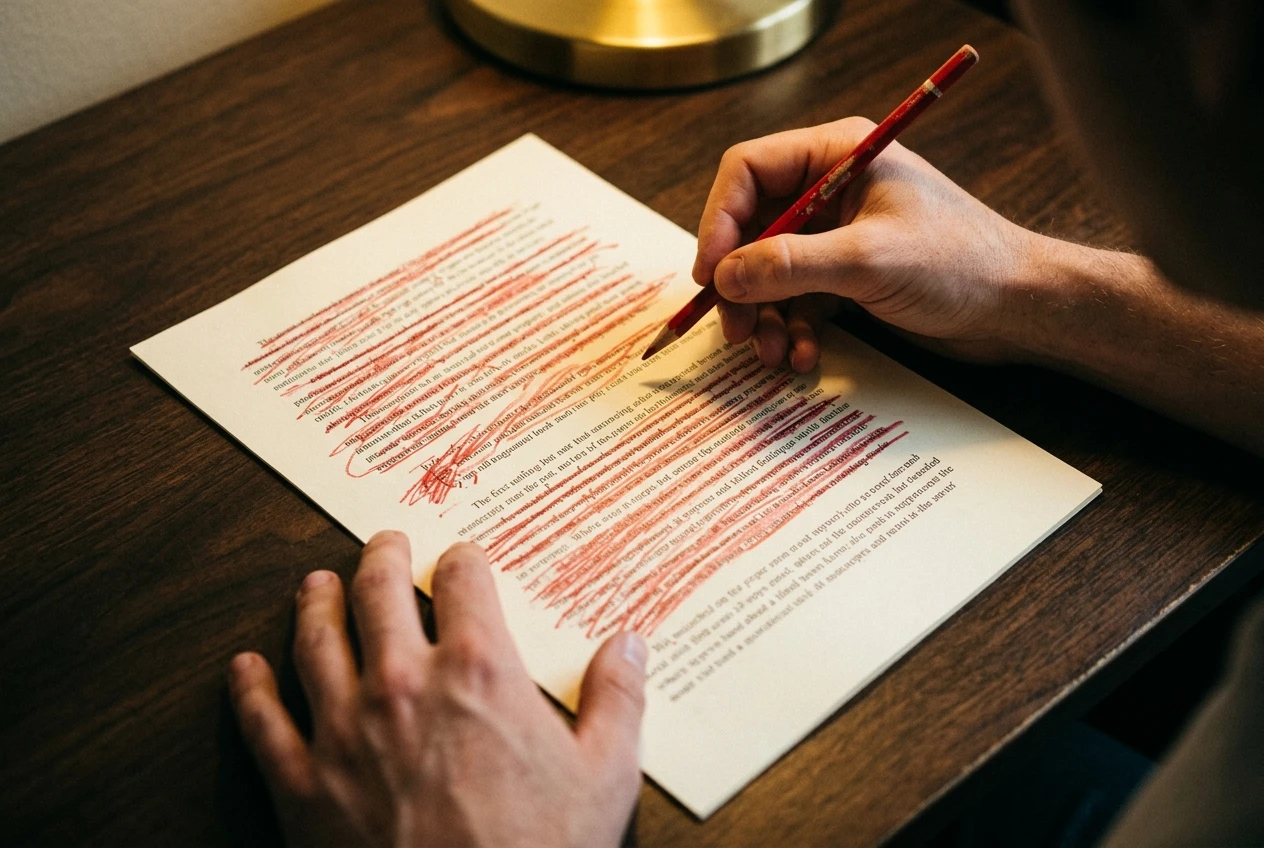
The read-through gets skipped. Once drafts arrive quickly, reading one slowly, as a skeptical stranger would, starts to feel inefficient. It is the step where most nuance gets restored.
Each shortcut is defensible alone. Together they produce a workflow in which a person approves content instead of making it, and approval is a much weaker form of judgement than authorship. If you’re building or auditing a process like this, How to create an AI content workflow that saves 20 hours a week covers the mechanics, and this piece suggests deciding in advance which steps stay manual.
A nuance check to run before anything publishes
Run these six questions on any piece that had AI involvement. They take a few minutes and each one targets a decision from above.
- Can you describe the one reader this is for? Include what they already believe and what they’re worried about. If the answer is a demographic, the piece is probably written for no one in particular.
- What did you cut? If nothing true was removed because it didn’t serve this reader, the piece hasn’t made an editorial choice yet.
- Where is the line someone could disagree with? If every sentence is safe, the piece may be accurate and still forgettable.
- Which detail could only come from someone who knows this topic first-hand? If you can’t find one, add one you can stand behind, or accept the piece is generic.
- Is every factual claim checked against a source you opened? Plausible-sounding statistics and quotes are a known failure of generated text. If you can’t verify it, cut it.
- Why does this go out now? A reason tied to your audience’s current situation beats a slot on the calendar.
A piece that fails one question can usually be fixed in an edit. A piece that fails three or more needs the decisions made first and the draft rewritten around them.
Who is accountable when the story is wrong, tone-deaf or just empty?
The model is not accountable, because it can’t be. It can’t correct a published error, apologise to a reader, or lose a client’s trust. Whoever publishes the piece carries all of that, whether or not they wrote the sentences.
That makes accountability the practical rule for dividing work. Automate tasks where the decision has already been made by a person: reformatting, cleanup, drafting variations of approved copy, gathering leads for research you will verify. Keep with a human every task where the output creates the meaning: choosing the angle, deciding the risk, defining the reader, confirming the facts, and approving the final version under a real name.

The three failures also differ in how visible they are. A wrong fact gets corrected publicly. A tone-deaf line gets screenshotted. An empty piece gets nothing: no complaint, no correction, just a reader who quietly stops opening your emails. Because empty content generates no feedback, it is the failure most worth checking for deliberately. If your AI use is material to how the piece was made, disclose it where the platform, partner or applicable rules require it, and be ready to explain what a person decided.
Take one piece you drafted with AI this month and run it through the nuance check above. Then read How to Use AI Without Losing Credibility for the transparency side of the same question.