
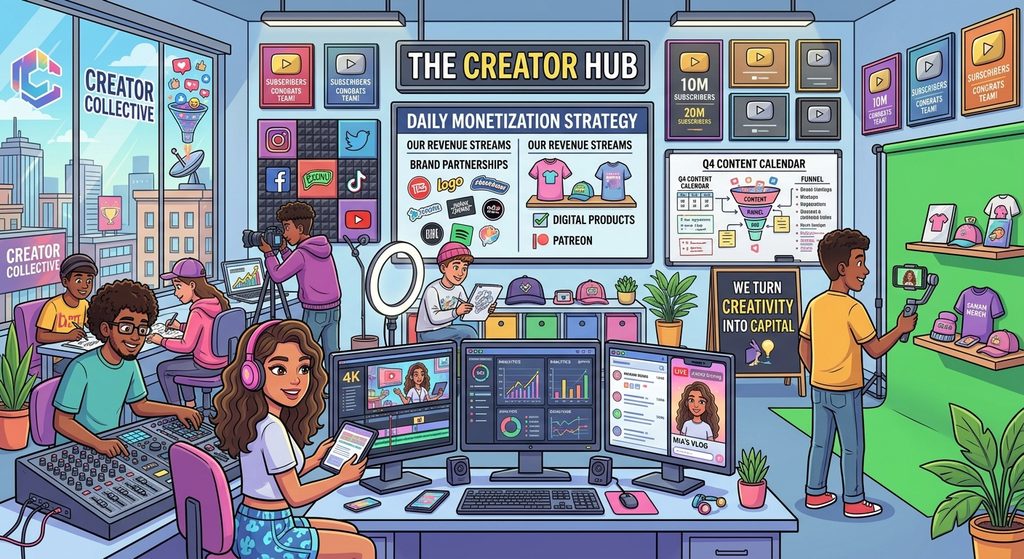
A TikTok can get someone interested in a brand. A creator can make them curious. A Google search can bring them to your website.
But what happens next?
That is where UX enters the conversation.
For Gen Z, marketing and user experience are increasingly difficult to separate. The ad might earn the click, but the experience determines whether that click becomes curiosity, trust, conversion, or an immediate exit.
1. Don’t make Gen Z work for the information
A beautiful website means very little if users have to hunt for basic information.
Gen Z has grown up navigating search engines, apps, social platforms and increasingly sophisticated digital interfaces. That doesn’t mean every Gen Z user behaves identically, but it does mean marketers shouldn’t design experiences around unnecessary friction.
Clear navigation, readable content, obvious calls to action and strong information architecture matter.
If someone lands on a product page and still has to ask:
“What is this?”
“How much is it?”
“Can I trust this?”
“What do I do next?”
The UX has already lost points.
2. Mobile isn’t an extra version of the website
For younger audiences, the mobile experience isn’t something marketers should design after desktop.
It should be part of the strategy from the beginning.
That means considering thumb-friendly interactions, readable typography, fast loading, accessible buttons, concise content and forms that don’t feel like filling out a government application from 2007.
Google continues to recommend strong Core Web Vitals, including fast loading, responsiveness and visual stability, as part of creating a good page experience.
And this matters beyond SEO.
A slow or unstable website interrupts the user’s journey. A marketing campaign can generate attention all day long, but if the landing page takes forever to load, the attention has nowhere to go.
3. Authenticity is also a UX issue
Authenticity is usually discussed as a branding problem.
It is also an experience problem.
If a brand’s TikTok feels casual and human but its website suddenly becomes corporate, overly polished and full of vague marketing language, there is a disconnect.
The user notices.
Current Gen Z customer-experience research places strong importance on authenticity and transparency alongside mobile experience, speed, social proof and personalization.
This doesn’t mean every brand needs to start typing in lowercase and pretending its social media manager is “just some girl with an iced coffee.”
Please don’t.
It means the personality communicated across the customer journey should feel coherent.
Your social media, website, emails, checkout and customer support are all part of the same brand experience.
4. Personalization without the creep factor
Gen Z marketing often talks about personalization, but personalization has a boundary.
There is a difference between:
“You might also like these products.”
and:
“We know exactly what you’ve been doing.”
One feels helpful.
The other feels like your browser history just developed a personality.
Good UX uses data to reduce friction and make experiences more relevant without making users feel watched.
Personalization should answer:
“How can we make this easier for the user?”
not:
“How much information can we use because we technically can?”
That distinction is increasingly important as consumers become more aware of how digital platforms collect and use their data.
5. Social proof should travel with the user
Gen Z’s customer journey rarely begins and ends on a brand’s website.
Discovery can happen through creators, TikTok, Instagram, YouTube, Reddit, search, reviews or recommendations from friends.
That means social proof shouldn’t be treated as something you throw onto a homepage and forget about.
Reviews, UGC, creator content, testimonials and real customer experiences can support users at different points in the journey.
Research into Gen Z customer experience highlights social proof and reviews as significant parts of the decision-making experience.
The UX question becomes:
What evidence does the user need at this exact moment to feel comfortable moving forward?
6. Don’t confuse “Gen Z design” with good UX
This one deserves its own warning label.
Gen Z UX does not mean:
- neon gradients everywhere
- giant animated text
- random micro-interactions
- slang in every button
- making everything look like TikTok
- deliberately messy websites because “Gen Z likes authenticity”
Trends aren’t UX strategy.
Nielsen Norman Group’s research on young adults specifically warns against stereotypes and focuses instead on observed behaviours, including task efficiency, search behaviour, multitasking and expectations for digital interfaces.
A Gen Z user doesn’t necessarily want a website that looks young.
They want a website that works.
7. Accessibility is part of the marketing experience
Accessibility isn’t a separate department that gets invited to the party after the campaign launches.
It is UX.
Readable contrast, keyboard accessibility, captions, descriptive links, appropriate heading structures, accessible forms and clear error messages can improve the experience for everyone.
And from a marketing perspective, accessibility also means fewer people are blocked from understanding or interacting with your message.
A campaign cannot convert someone who cannot comfortably use the experience behind it.
8. The real Gen Z UX advantage: less friction, more trust
The strongest Gen Z marketing strategy may not be another trend.
It may simply be removing unnecessary friction.
Make the content understandable.
Make the website fast.
Make the navigation predictable.
Make the brand voice consistent.
Make the CTA obvious.
Make the checkout straightforward.
Make the information easy to verify.
Make the experience accessible.
And most importantly, make the user feel like a person rather than a conversion statistic.
The S&S Takeaway
Gen Z marketing shouldn’t be reduced to aesthetics, memes or platform trends.
UX is marketing.
Every click, scroll, search, page transition, form, button and checkout contributes to the perception of a brand.
The campaign might get attention.
The UX has to earn the next step.
For marketers targeting Gen Z, the question isn’t simply:
“How do we get their attention?”
It’s:
“Once we have it, have we built an experience worth staying for?”
That’s where marketing stops being noise and starts becoming strategy.
