

Building a brand involves more than choosing a name, designing a logo or creating social media content. Businesses also need to understand who they are, who they want to reach and what makes them worth remembering.
Without that understanding, it’s easy to create marketing that looks good but doesn’t communicate a clear message.
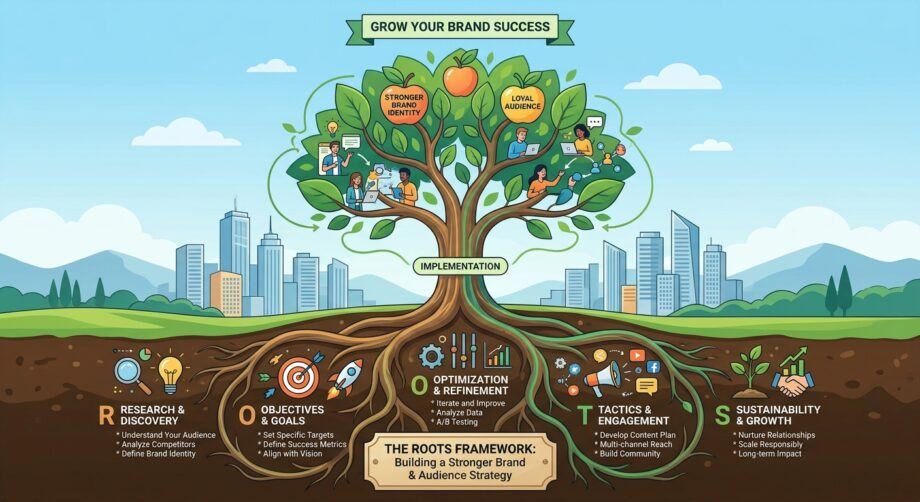
At Signal & Strategies, I believe effective brand strategy starts with understanding the business itself and the people it wants to connect with. That’s why I’m developing the ROOTS Framework, a five-step approach to brand identity, positioning and audience strategy.
What Is the ROOTS Framework?
ROOTS stands for Recognise, Observe, Outline, Translate and Strengthen. Each stage focuses on an important part of building a brand that communicates clearly and develops meaningful relationships with its audience.
R: Recognise Your Identity
Before a business can communicate its value, it needs to understand what it stands for.
This includes its purpose, values, personality, strengths and the problems it wants to solve. These elements help guide decisions about messaging, visual identity and the overall customer experience.
A brand shouldn’t be built around aesthetics alone. Its identity should influence how it communicates and how it delivers on its promises.
O: Observe Your Audience
Understanding your audience is essential to creating relevant marketing.
Businesses need to look beyond basic demographics and consider their audience’s needs, interests, motivations and challenges.
This could involve researching customer feedback, analysing search behaviour, conducting surveys or observing the questions people ask on social media.
The goal isn’t to make assumptions about what people want. It’s to gather information that helps you understand them better.
O: Outline Your Positioning
Once a business understands its identity and audience, it can begin defining its position in the market.
What makes the business different? What value does it provide, and why might someone choose it over an alternative?
Positioning helps a brand communicate its strengths without trying to appeal to everyone or claiming to be the best at everything.
A clear point of difference gives marketing a stronger direction and helps the audience understand what the business offers.
T: Translate Identity Into Messaging
A brand’s identity and positioning need to come through in its communication.
This means developing a recognisable brand voice, clear messaging and consistent themes across platforms such as websites, social media and marketing campaigns.
For example, a brand that values simplicity should reflect that in how it explains its products, presents information and communicates with customers.
Consistency doesn’t mean repeating the same message everywhere. It means ensuring that the brand remains recognisable while adapting its communication to different audiences and platforms.
S: Strengthen the Relationship
Brand strategy shouldn’t end once someone recognises a business.
Building a relationship requires listening to feedback, communicating honestly and providing experiences that reflect what the brand promises.
Businesses can review customer feedback, audience engagement and brand perception to understand what’s working and where improvements may be needed.
The objective is to build trust over time rather than focusing exclusively on short-term attention.
Putting ROOTS Into Practice
Imagine a small skincare business trying to stand out in a crowded market.
Using ROOTS, the business could define its identity and values, research what its intended customers care about, establish a meaningful point of difference and develop messaging that communicates its approach clearly.
It could then use customer feedback and audience responses to refine its communication over time.
Instead of simply following every popular trend, the business would have a clearer understanding of what it wants to represent and whom it wants to serve.
Why Brand and Audience Strategy Matter
I think one of the biggest challenges in marketing is trying to communicate with an audience before understanding what matters to them.
A business might publish regularly, invest in attractive visuals and experiment with different campaigns, but those activities are more difficult to direct without a clear brand identity and audience strategy.
ROOTS provides a starting point for bringing those elements together. It encourages businesses to understand themselves, research their audience and build communication around a meaningful position in the market.
The framework isn’t about creating a rigid identity that can never change. Audiences evolve, markets shift and businesses grow. A strong strategy should provide direction while leaving room to learn and adapt.
Because building a recognisable brand starts with knowing what you stand for and understanding the people you want to reach.
That’s the principle I want to bring into the Brand and Audience Strategy pillar at Signal & Strategies.
What makes you remember a brand: its identity, the way it communicates or the experience it gives you? Share your thoughts in the comments. 🤎