

Growing a business isn’t just about attracting more visitors, gaining followers or increasing sales. It’s also about understanding how a business creates value, generates revenue and builds a model that can support its long-term goals.
A business might have plenty of engagement on social media but struggle to convert that attention into income. Another might generate sales but find that its costs make growth difficult to sustain.
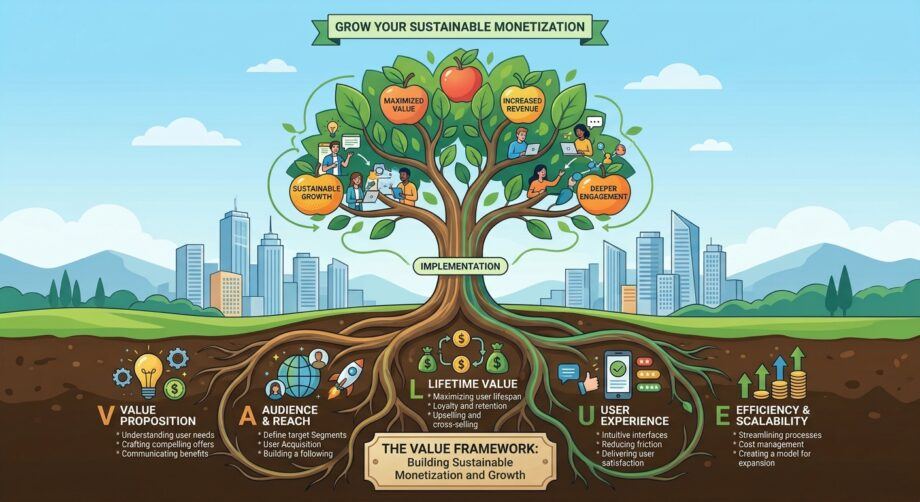
At Signal & Strategies, I believe monetization and growth should be approached strategically rather than treated as separate goals. That’s why I’m developing the VALUE Framework, a five-step approach to connecting business value with revenue opportunities and sustainable growth.
What Is the VALUE Framework?
VALUE stands for Validate, Assess, Link, Understand and Evaluate. Each stage helps businesses consider how they can generate revenue, communicate their offers and make informed decisions about growth.
V: Validate the Value
Before deciding how to monetise a business, it’s important to understand what value it provides.
What problem does the business solve? Who benefits from its products or services? Is there evidence that people want what it offers?
Customer feedback, market research, competitor analysis and small-scale testing can help answer these questions.
The goal is to understand whether the offer meets a genuine need rather than building a revenue strategy around assumptions.
A: Assess Revenue Opportunities
Once the business understands its value, it can explore suitable ways to generate income.
Depending on the business model, this might include selling products, offering services, creating digital resources, introducing subscriptions or developing relevant affiliate partnerships.
Not every revenue stream will suit every business. A freelancer might focus on service packages, while a content-based business could explore digital products or carefully selected affiliate partnerships.
The important thing is to choose opportunities that align with the audience’s needs and the business’s capabilities.
L: Link Value to the Offer
A business needs to communicate why its offer is worth considering.
This involves explaining what customers receive, how the product or service addresses their needs and what distinguishes it from the alternatives.
Pricing and messaging should reflect the value being delivered, while remaining clear and honest about what customers can expect.
When people understand what they’re paying for, they can make more informed purchasing decisions.
U: Understand the Growth Journey
Monetization doesn’t happen in isolation. It is influenced by the entire customer journey, from discovering a brand to deciding whether to purchase and return.
Businesses should consider where potential customers find them, what encourages them to explore an offer and what might prevent them from completing a purchase.
Improving website navigation, clarifying service descriptions, simplifying checkout processes and providing helpful follow-up communication can all contribute to a better customer experience.
Growth can also come from existing customers through repeat purchases, referrals and stronger relationships, rather than relying exclusively on constantly acquiring new ones.
E: Evaluate and Evolve
A growth strategy needs to be reviewed regularly.
Businesses can track metrics such as revenue, profit margins, conversion rates, customer acquisition costs and retention, depending on their goals and business model.
These measurements help reveal whether an activity is producing meaningful results. For example, a campaign might generate significant website traffic but very few enquiries or sales.
Rather than assuming that more traffic automatically means better performance, businesses should investigate what the data reveals and adjust their approach.
The objective is to make decisions based on evidence and improve the business over time.
Putting VALUE Into Practice
Imagine a small business selling handmade products online. Its social media posts attract attention, but sales remain inconsistent.
Using VALUE, the business could research which products customers want most, assess its pricing and revenue opportunities, clarify the benefits of its products, review the purchasing journey and measure which marketing activities lead to profitable sales.
This gives the business a structured way to identify opportunities for improvement without simply increasing its posting frequency or spending more on advertising.
Why Monetization and Growth Need to Work Together
I think it’s important to recognise that generating revenue and growing a business aren’t exactly the same thing.
Revenue can increase while expenses rise even faster. A business can gain customers without retaining them, or attract attention without having a clear path from discovery to purchase.
Sustainable growth requires businesses to consider how their offers, customer experience, costs and marketing activities work together.
The VALUE Framework is my approach to making those connections more intentional. It provides a structure for evaluating opportunities, improving the customer journey and measuring progress without assuming that every business needs the same growth strategy.
Because successful growth isn’t just about making more money. It’s about building a business that creates genuine value and can continue delivering it over time.
That’s the principle I want to bring into the Monetization and Growth pillar at Signal & Strategies.
What do you think matters most for sustainable business growth: finding new customers, retaining existing ones or improving the value of your offer? Share your thoughts in the comments.