
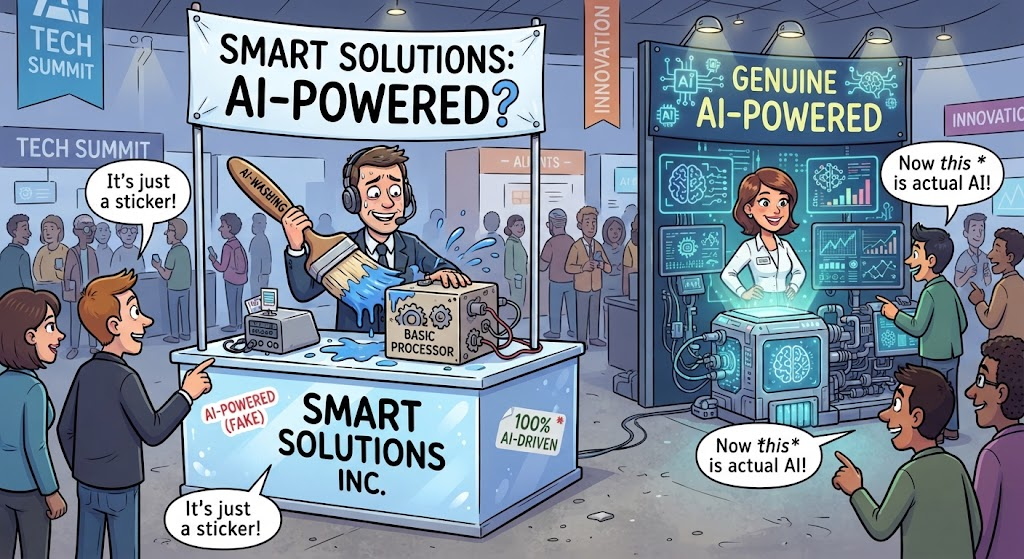
I’ve started noticing how often the words “AI-powered” appear on products, websites and marketing campaigns.
And it made me wonder:
Does adding AI actually make something better, or does it just make the product sound more impressive?
There’s a difference.
🤖 AI Is Not Automatically a Selling Point
Putting “AI” on a product doesn’t explain what the AI actually does.
If a company says something is AI-powered, I want to know:
- What is the AI doing?
- Why is it being used?
- What problem does it solve?
- Does it actually improve the experience?
- What does the customer get from it?
Otherwise, “AI-powered” starts to feel more like a marketing label than useful information.
🔍 Transparency Matters
I don’t think brands need to reveal every technical detail behind their AI.
But customers deserve enough information to understand what they’re actually buying.
For example, saying:
“Our AI helps personalize your recommendations based on your preferences.”
tells me something.
Simply saying:
“Next-generation AI-powered experience.”
doesn’t tell me much at all.
One explains the value.
The other sounds impressive without giving me anything concrete.
🧠 Don’t Make AI the Entire Story
AI should support the product’s value, not become the value proposition by itself.
If the underlying product solves a genuine problem, explain how AI contributes to that solution.
If AI doesn’t meaningfully improve the experience, then perhaps it doesn’t need to be the headline.
Because customers aren’t necessarily buying AI.
They’re buying what the product helps them do.
My Takeaway
For me, transparency starts with asking a simple question:
Can I explain what the AI actually adds?
If the answer is yes, tell people.
If the answer is basically “because AI sounds innovative,” that’s where the marketing needs another look.
“AI-powered” should describe a real function, not decorate a product description.
My transparency input: Don’t just tell people that your product uses AI. Show them why it matters.