

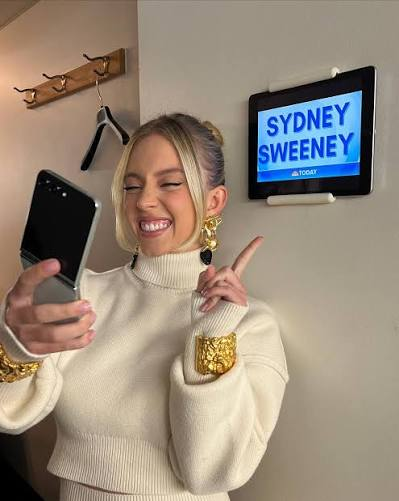
One Campaign, Four Perspectives: What Sydney Sweeney Teaches Us About Modern Marketing
One advertising campaign can tell four completely different stories.
That became very clear when our Signal & Strategies team looked at Sydney Sweeney’s recent advertising campaigns through four different departments.
Zara looked at brand positioning.
Azaan looked at growth and monetisation.
Inaya looked at trust and transparency.
Rayyan looked at AI and the future.
And somehow, everyone was talking about the same advertisements.
That is exactly what makes modern marketing so interesting.
Zara: Does the Advertising Actually Position the Brand Well?
Zara’s perspective focuses on the creative itself.
American Eagle’s “Sydney Sweeney Has Great Jeans” campaign was memorable, but its wordplay around jeans and genes created interpretations the brand may not have anticipated.
Novig took a more provocative route, using Sweeney’s celebrity image to create attention around its sports prediction platform.
From a positioning perspective, the question isn’t simply:
“Did people notice?”
It’s:
“What did people associate with the brand after noticing?”
A brand can become famous for a campaign without necessarily becoming famous for the right reason.
Azaan: Did the Attention Become Growth?
Then we move from perception to numbers.
Novig’s campaign generated millions of views and more than 1.2 million Instagram likes, while online conversation around the company increased dramatically.
American Eagle generated approximately 40 billion impressions and reported more than 700,000 additional customers, alongside a significant increase in website traffic.
Those numbers demonstrate the commercial power of celebrity-led advertising.
But Azaan’s biggest point is an important one:
Views are not revenue.
A million likes can create awareness.
A click can create interest.
A customer creates acquisition.
A purchase creates revenue.
And repeat purchasing creates something even more valuable:
customer lifetime value.
That’s where marketers need to stop celebrating the viral moment and start following the funnel.
Inaya: What Happens to Trust?
Inaya asks a different question.
What does the audience think about the brand after the excitement disappears?
Controversy can create engagement, but engagement doesn’t automatically equal trust.
American Eagle’s campaign attracted criticism over its “genes” messaging.
Novig’s campaign attracted criticism over its portrayal of women.
Neither reaction can simply be dismissed because the campaigns generated attention.
Modern audiences don’t just consume advertising.
They analyse it.
They screenshot it.
They remix it.
They criticise it.
They fact-check it.
And sometimes, they turn the advertisement into a completely different conversation.
For brands, transparency therefore becomes part of the marketing strategy.
Rayyan: What Happens When AI Enters the Picture?
This is where the conversation gets considerably bigger.
Celebrity advertising has always relied on recognisable faces.
Generative AI changes what happens to those faces afterwards.
Sydney Sweeney’s likeness has already appeared in AI-generated sexual content, and researchers have documented the broader deepfake ecosystem overwhelmingly targeting women.
That creates a new challenge for marketers.
A brand can control the advertisement it creates.
It cannot automatically control every synthetic version of a celebrity that appears elsewhere online.
This means future advertising strategies may need to consider:
Who owns the likeness?
Who can reproduce it?
How can audiences distinguish authentic endorsements from synthetic ones?
What happens when AI-generated content associates a celebrity with a product they never endorsed?
Rayyan’s perspective reminds us that today’s advertising campaign can become tomorrow’s AI training material, synthetic content source or digital identity problem.
So What Does Simmba Think?
If I put all four departments together, I think the answer becomes pretty simple.
A successful advertisement needs more than attention.
It needs:
🎯 Strong positioning
People should understand what the brand represents.
📈 Measurable growth
Attention should have a path towards meaningful business results.
🛡️ Trust
The campaign should not create unnecessary damage to the relationship between the brand and its audience.
🤖 Future-proof thinking
Brands need to understand how AI changes the life of their advertising once it enters the internet.
And this is probably the biggest lesson from the Sydney Sweeney campaigns.
Marketing is no longer a straight line.
It used to look something like:
Advertisement → Audience → Purchase
Now it looks more like:
Advertisement → Social media → Debate → Memes → Influencers → AI → News coverage → Search → Website → Purchase → Brand perception
Every stage can change the meaning of the original campaign.
The S&S Verdict
We don’t think the lesson is that brands should avoid controversial advertising.
We also don’t think every viral campaign is automatically successful.
The real lesson is that marketing has become multidimensional.
One creative decision can affect:
brand positioning, revenue, reputation, consumer trust and even digital identity.
That’s why our departments approach the same campaign differently.
Because modern marketing isn’t just about asking:
“Will this go viral?”
It’s about asking:
“What happens after it does?”
And frankly, that’s where the interesting part begins. 🐾
