
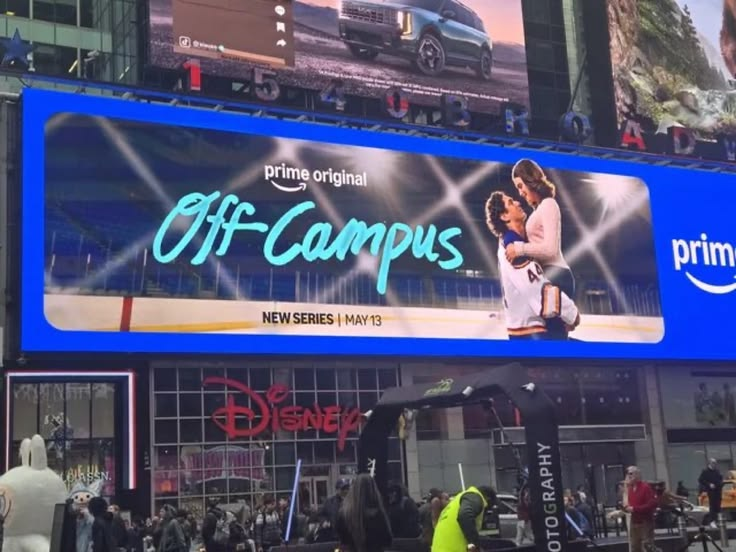

From Character to Celebrity: When Fictional Characters Influence Buying Decisions
What happens when audiences don’t simply watch a character, but become emotionally attached to them?
They root for them. They quote them. They debate their decisions. They make edits of them. They recommend the story because of them.
And eventually, they may start following the actor behind the character.
That creates an interesting question for marketers:
Can the emotional connection audiences have with fictional characters influence how they perceive the actors who play them, and eventually the brands those actors represent?
The Off Campus series gives us an especially interesting case study because its characters already had dedicated audiences through Elle Kennedy’s books before they arrived on screen.
The actors weren’t introducing completely unknown personalities to audiences.
They were stepping into characters people already cared about.
And that changes the marketing equation.
🎭 The Character Comes First
When viewers meet the Off Campus cast, they’re introduced to a collection of characters with established identities and relationships.
Belmont Cameli → Garrett Graham
Ella Bright → Hannah Wells
Mika Abdalla → Allie Hayes
Antonio Cipriano → John Logan
Jalen Thomas Brooks → John Tucker
Stephen Kalyn → Dean Di Laurentis
The actors bring those characters to life, but the audience’s emotional investment begins with the story.
For book readers especially, these characters aren’t new.
They already have personalities, histories, relationships, and expectations attached to them.
That gives the television adaptation something incredibly valuable from a marketing perspective:
Existing emotional investment.
❤️ People Don’t Just Remember Characters. They Feel Them.
Think about the way people talk about fictional characters.
They don’t usually say:
“The character had an interesting narrative arc.”
They say:
“I love him.”
“She deserved better.”
“That’s my favourite character.”
“I cannot stand him.”
That’s emotional language.
And emotion is one of the strongest forces in consumer behaviour.
When audiences become emotionally invested in a character, that character becomes associated with particular feelings and ideas.
For Garrett, viewers might associate the character with confidence, hockey, romance, popularity, and the broader Briar University lifestyle.
For Hannah, they might associate her with intelligence, ambition, vulnerability, music, and personal growth.
Those associations become part of the world surrounding the story.
👀 Then We Meet the Actor
Here’s where things get interesting.
A viewer watches Garrett Graham and thinks:
“I like this character.”
Then they discover Belmont Cameli.
They follow him on Instagram.
They watch an interview.
They see behind-the-scenes footage.
They notice what he wears.
They discover his other work.
Suddenly, the audience’s relationship isn’t only with the character.
It’s with the person who plays him.
The journey can look like:
Character → Actor → Familiarity → Personal Brand → Brand Partnership
That doesn’t mean audiences automatically transfer every feeling from the character to the actor.
But the character can be the introduction.
🏒 Garrett Graham Is Not Belmont Cameli
This distinction matters.
Garrett Graham is a fictional character.
Belmont Cameli is a real person.
They’re not interchangeable.
But audiences can still develop associations between them because the actor is the face, voice, and physical presence they’ve repeatedly seen representing that character.
This is particularly relevant when an actor becomes strongly associated with a breakout role.
The character can become the first thing people recognise.
Over time, the actor can build an identity beyond it.
That’s the transition from:
“That’s Garrett Graham.”
to:
“That’s Belmont Cameli, who plays Garrett Graham.”
and eventually:
“That’s Belmont Cameli.”
That final stage is where personal branding becomes particularly interesting.
🛍️ So Where Do Brands Come In?
Imagine you’ve watched Off Campus.
You recognise Belmont.
You’ve followed his career.
Then you see him in a campaign for a brand.
You may stop scrolling because you already know who he is.
That doesn’t guarantee a purchase.
But it can create something valuable:
attention.
And attention is the first step in many consumer journeys.
The brand is no longer being introduced by a completely unfamiliar face.
It’s appearing alongside someone the audience already recognises.
👟 The Reebok Example
Belmont Cameli’s partnership with Reebok provides an interesting real-world example.
Reebok announced Cameli as a global brand ambassador, highlighting his relationship with the brand and his existing affinity for its Classics sneakers.
That’s strategically interesting because the partnership isn’t solely about:
“Belmont is famous because of Off Campus.”
There’s another layer:
Belmont already fits the world Reebok wants to represent.
The actor brings his own identity, his growing cultural relevance, and his existing relationship with the product.
The Off Campus association can then become part of the wider recognition surrounding him.
It’s a useful example of how character recognition can contribute to celebrity visibility without being the entire reason a partnership works.
🧠 But Would You Actually Buy It?
Here’s where marketers need to be realistic.
Loving Garrett Graham doesn’t mean you automatically want whatever Belmont Cameli promotes.
You might see a pair of sneakers and think:
“Okay, those are actually nice.”
But then you might also think:
“They’re $180. Absolutely not.” 😂
That’s consumer behaviour in action.
Celebrity influence can create:
- Awareness
- Interest
- Curiosity
- Recognition
- Conversation
- Consideration
But there are still other factors involved in the purchase.
Price.
Quality.
Need.
Trust.
Brand reputation.
Personal preference.
Fandom can get someone to look.
It can’t force them to buy.
✨ Characters Also Sell Aspirations
There’s another layer to this.
Fictional characters often represent aspirational identities.
Garrett isn’t simply a hockey player.
He’s part of a world built around sport, friendship, romance, confidence, university life, and social status.
Hannah represents another set of qualities.
The audience isn’t necessarily thinking:
“I want to literally become Hannah Wells.”
Instead, they may connect with elements of her identity.
The same thing happens with fashion, beauty, fitness, and lifestyle marketing.
Consumers often buy products because of what those products represent.
The product becomes a tiny piece of an identity they admire.
📱 Fandom Amplifies Everything
The internet makes this even more powerful.
A character doesn’t disappear when the episode ends.
Fans create:
- TikToks
- Instagram edits
- Pinterest boards
- Memes
- Fan accounts
- Character discussions
- Cast edits
- Quotes
- Reaction videos
The audience effectively keeps marketing the story to itself.
That’s powerful.
And when the actors participate in that ecosystem through interviews, social media, events, or partnerships, the boundary between show, celebrity, fandom, and brand becomes increasingly interconnected.
⚠️ But Character Love Doesn’t Equal Brand Loyalty
This is where brands can get things very wrong.
A celebrity can have an incredibly passionate fandom and still be completely wrong for a particular product.
If the partnership feels random, audiences notice.
If the celebrity promotes every product imaginable, audiences notice.
If the product doesn’t fit their identity, audiences notice.
And if the campaign relies entirely on:
“You like this person, therefore buy this.”
that’s not really a strategy.
It’s wishful thinking with a marketing budget.
The strongest partnerships give audiences an actual reason to believe the collaboration makes sense.
🔗 The Character-to-Consumer Journey
For marketers, the Off Campus example can be viewed as a broader journey:
📚 Story
The audience discovers the world.
❤️ Character
They develop an emotional connection.
🎭 Actor
They become familiar with the person behind the character.
📱 Fandom
They engage with the wider community.
✨ Celebrity Identity
The actor develops a public identity beyond the role.
🛍️ Brand
A relevant product enters that ecosystem.
💳 Consumer
The audience decides whether the product is actually worth buying.
The crucial point is that the final step isn’t guaranteed.
Every stage has to earn the next one.
📡 What Marketers Can Learn From Off Campus
The lesson isn’t:
“Hire actors from popular shows.”
It’s much more useful than that.
Marketers should pay attention to the emotional associations surrounding the people they partner with.
Ask:
- What character made audiences notice them?
- What does that character represent?
- What does the actor represent outside that character?
- Who follows them?
- Why does that audience care?
- What brands naturally fit their identity?
- Does the partnership feel believable?
- Can the relationship continue beyond the current show?
That’s how you move from celebrity recognition to actual marketing strategy.
🐈⬛ Simmba’s Signal
Simmba has reviewed the evidence.
His conclusion:
“People may notice the product because they like the celebrity. They will only buy it if they like the product.”
Honestly?
The cat has a point.
Characters create emotional connections.
Actors create recognition.
Fandom creates community.
Brands create opportunities.
And when all four align, entertainment can become a surprisingly powerful marketing ecosystem.
So, would you buy something because Garrett Graham uses it?
Maybe.
But the more interesting question is:
Would Garrett Graham make you notice something you otherwise would’ve ignored?
That’s where the real marketing signal begins. 📡🏒
