

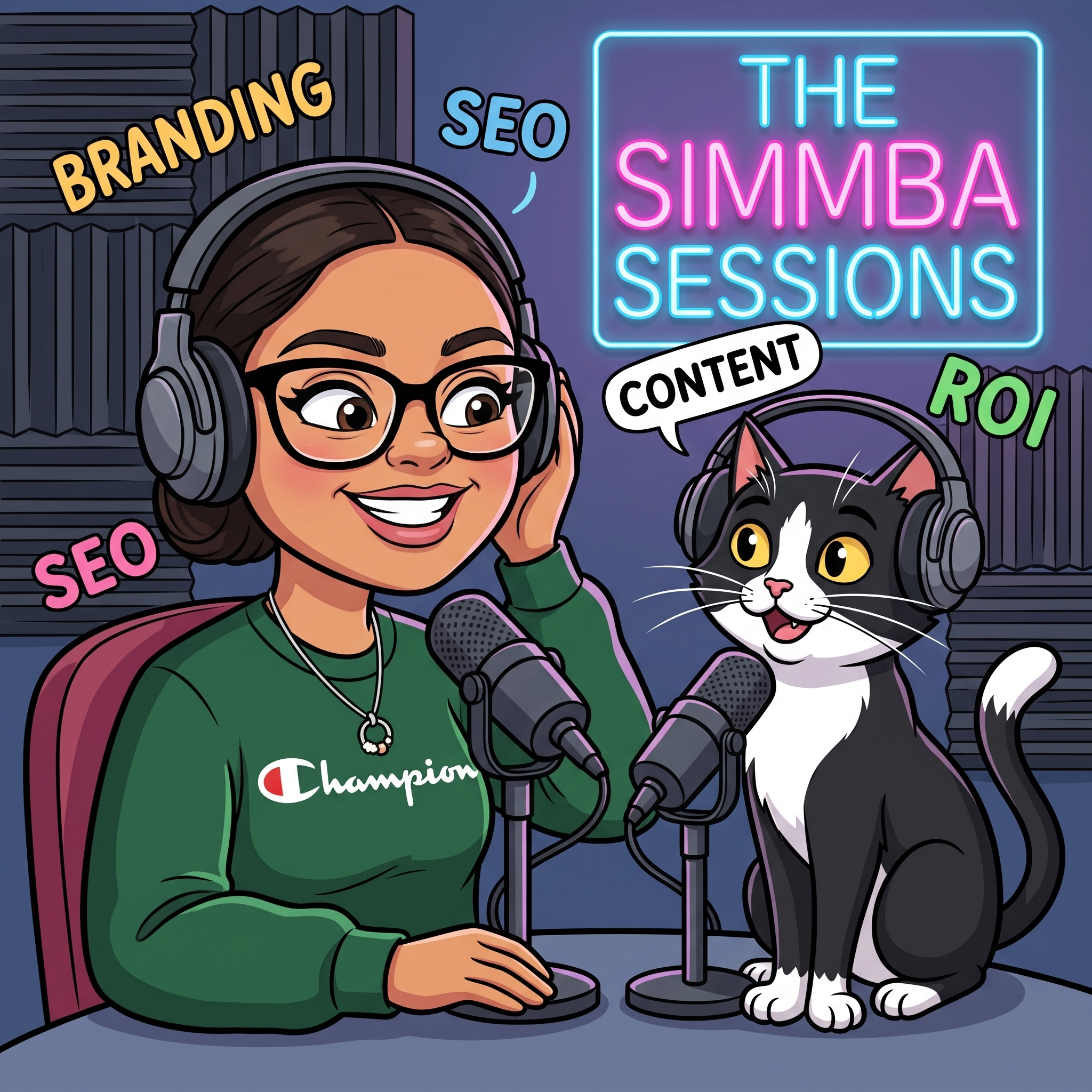
A cat’s guide to writing stories humans actually want to read

Hello again, humans.
Simmba here.
I have spent years watching humans stare at screens, type things, delete things, rewrite things, stare at the screen again and then announce:
“I don’t know how to start this.”
Fortunately, I do.
I simply stare at them until they figure it out.
Today, we’re talking about content writing and storytelling.
And yes, I have thoughts.
🐾 1. Start With Something Worth Following
Humans have very short attention spans.
I know this because I can walk into a room, look at my human for three seconds and receive absolutely immediate attention.
That is a hook.
Good content needs the same thing.
Instead of beginning with a long explanation of what the article will discuss, give the reader a reason to continue.
Ask an interesting question.
Introduce a problem.
Make a surprising observation.
Tell them something they didn’t expect.
Simmba’s storytelling lesson:
If you want someone to stay, give them a reason to care about what happens next.
🐾 2. Stories Need a Human Problem
Even when you’re writing about marketing, technology or business, people are still the ones reading it.
And people have problems.
They want to save time.
Make money.
Understand something confusing.
Feel less alone.
Make a better decision.
Avoid making a terrible mistake.
Good storytelling connects information to those human experiences.
Imagine two introductions:
Version one:
“AI search is changing the digital marketing landscape.”
Okay.
Now try:
Version two:
“You spend three hours writing an article, publish it, and then discover that your potential customer asked an AI the same question instead.”
Now we have a problem.
And humans love problems.
Usually because they want to know how they end.
🐾 3. Don’t Forget the Details
One of the easiest ways to make writing feel more memorable is to include specific details.
Don’t just say:
“The cat was hungry.”
Tell me:
“Simmba sat beside the empty bowl, stared directly into my soul and began knocking objects off the table.”
That is storytelling.
Specific details create an image in someone’s mind.
The same principle works in marketing content.
Instead of saying:
“Working from home is convenient.”
Explain what that convenience actually looks like.
No commute.
No waiting for the bathroom.
Flexible working hours.
Making coffee without having to leave the house.
Suddenly, the reader isn’t being told an abstract benefit.
They’re experiencing it.
🐾 4. Information Needs a Personality
Content doesn’t have to sound like it was written by a committee.
Humans are people.
They have opinions, experiences, humour and different ways of explaining things.
That personality can make useful information easier to remember.
It doesn’t mean turning every article into a comedy routine.
It means allowing the writer’s voice to exist.
A marketing article can be intelligent without sounding robotic.
A technical explanation can be simple without becoming childish.
A business article can be professional without becoming painfully dull.
Simmba’s rule:
If your writing sounds like nobody actually talks that way, something has gone wrong.
🐾 5. Give the Story Somewhere to Go
A good piece of content should have movement.
That doesn’t necessarily mean a dramatic plot.
It means the reader starts somewhere and finishes somewhere else.
Maybe they begin with a question and leave with an answer.
Maybe they begin confused and leave understanding the subject.
Maybe they begin with a problem and leave with a solution.
Think of it as a journey:
Question → Problem → Discovery → Insight → Action
Without that movement, content can feel like a pile of information.
And humans already have Wikipedia for piles of information.
🐾 So What Makes Content Memorable?
After extensive research, observation and several strategic naps, I have developed my professional framework:
🐾 The Simmba Story Test
1. Does it make me curious?
Give me a reason to continue.
2. Does it feel human?
Show me the person or problem behind the information.
3. Can I picture it?
Use details instead of vague statements.
4. Does it sound like someone actually wrote it?
Give the content a voice.
5. Did I learn or feel something by the end?
If nothing changed, why did I read it?
🐾 The Final Lesson From a Cat
The internet has an enormous amount of content.
More articles.
More videos.
More posts.
More AI-generated words.
Which means simply producing content isn’t enough.
People need a reason to stop scrolling.
A reason to keep reading.
And, ideally, a reason to remember what they just read.
That is where storytelling matters.
You don’t need an elaborate plot.
You don’t need dramatic characters.
You don’t even need a cat.
Although, obviously, having a cat improves the article considerably.
The goal is simple:
Don’t just give people information. Give the information somewhere to live in their mind.
Now if you’ll excuse me, I’ve spent enough time thinking about storytelling.
There is a sunbeam currently occupying my favourite spot.
And unlike humans, I know when to prioritise the important things.
Simmba out. 🐈⬛📖