

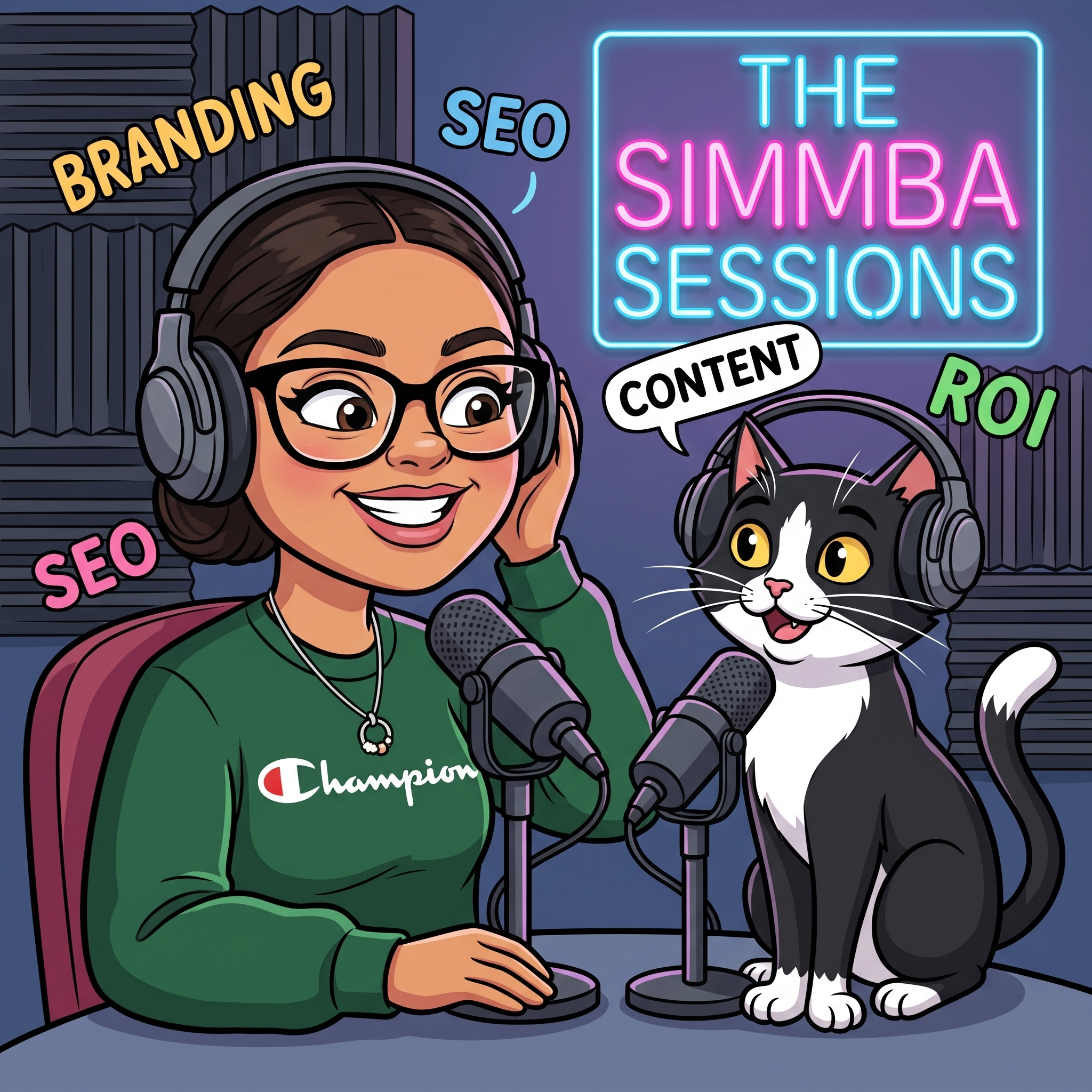
A cat’s guide to being found when humans stop searching the old-fashioned way

Greetings, humans.
It is once again me, Simmba, Raja of the House, professional napper and apparently an SEO consultant now. 🐈⬛
I have questions.
For years, humans typed something into Google, looked at a page of results and clicked a website.
Now humans are increasingly asking AI questions in complete sentences.
Which means websites have a new problem:
How do you get discovered when the search engine starts answering the question for you?
I investigated.
🐾 SEO Isn’t Dead. The Search Experience Is Changing.
Traditional SEO is still important.
Search engines need to discover, crawl and understand websites. Websites still benefit from useful, relevant and well-structured content.
But AI-powered search adds another layer.
Instead of simply asking:
“Which cat food is good for indoor cats?”
a human might ask an AI:
“My indoor cat is fussy, slightly overweight and refuses anything that smells suspicious. What type of food should I look for?”
That is a very different search behaviour.
The query is conversational.
The answer may combine information from several websites.
And instead of receiving ten blue links, the user may receive an AI-generated answer with sources.
Simmba’s SEO lesson:
Humans aren’t necessarily searching less.
They’re searching differently.
🐾 So What Does AI Search Look For?
There isn’t one magic “AI SEO button.” Please stop looking for it. I have investigated the cupboard and found nothing.
AI search systems still depend on accessible, understandable web content.
For example, OpenAI says websites can help their content appear in ChatGPT search by allowing OAI-SearchBot to crawl the site.
Bing is also giving publishers new information about how their pages appear in AI-generated answers, including which URLs are cited and the queries associated with those citations.
That means visibility is becoming more than:
“What position am I ranking at?”
It can also become:
“Is my website being understood and referenced when an AI answers someone’s question?”
🐾 Content Needs to Answer Real Questions
This is where I, a cat, have an advantage.
Cats ask extremely specific questions.
“Why is my bowl empty when I can clearly see the bottom?”
“Why did you buy me a new toy when the cardboard box is right there?”
“Why are you working when you could be giving me treats?”
Good content works in much the same way.
Instead of stuffing an article with the same keyword 37 times, create content that genuinely answers the questions people are asking.
Useful explanations.
Clear headings.
Specific information.
Evidence where appropriate.
Original experiences and insights.
And content that actually satisfies the reader.
Google’s current Search guidance continues to emphasise useful, reliable content, while its updates also make clear that spam policies apply to generative AI features in Search.
Simmba’s SEO lesson:
Don’t write for the algorithm.
Write something the algorithm can understand because a human actually found it useful.
🐾 AI Search Needs Clear Signals
Here’s another thing humans should remember:
AI cannot magically understand everything.
Websites need clear structures.
That means things such as:
- Descriptive page titles
- Clear headings
- Logical site navigation
- Relevant internal links
- Accurate metadata
- Structured information where appropriate
- Crawlable pages
- Updated content
- Consistent information
Bing specifically recommends maintaining crawlability, indexing and current content, with tools such as sitemaps and IndexNow helping search systems discover changes.
And duplicate or conflicting versions of pages can make it harder for search systems to determine which version should be surfaced.
In other words:
Make your website easy for humans to understand and easy for machines to interpret.
That sounds suspiciously like good UX.
I approve.
🐾 The New SEO Question
Traditional SEO often asks:
“How do I rank?”
AI search introduces another question:
“How do I become a useful source?”
That distinction matters.
Bing’s AI Performance reporting now measures things such as citations and the pages referenced in AI-generated answers. It specifically notes that citation counts do not represent a ranking or guarantee importance, but they provide publishers with a new way to understand AI visibility.
So perhaps the future isn’t simply about getting humans to click a blue link.
It is also about creating information that AI systems can confidently retrieve, understand, reference and connect to a user’s question.
🐾 Simmba’s Final Verdict
SEO isn’t disappearing.
It is growing another head.
One head still understands traditional search.
The other is learning how humans interact with AI.
And websites need to serve both.
So if you are building a website, don’t obsess over trying to “game AI.”
Build something useful, accessible, understandable and trustworthy.
Because whether the visitor arrives through Google, Bing, ChatGPT or an actual human recommendation, the final test remains beautifully simple:
Did the website help?
If yes, congratulations.
You have passed the Simmba test. 🐾
Now please close the laptop.
It is treat o’clock.
Simmba out. 🐈⬛