

What is search intent in SEO? The standard answer is the reason behind a search, sorted into informational, commercial, transactional and navigational. That answer is correct, and it is also where most people stop. Four labels can tell you a page should be a guide or a product page. They can’t tell you what the person reading it is worried about.
The keyword says what they typed. It doesn’t say why
A query is a compressed version of a thought. Someone types “how to choose a website host” and leaves out everything that shaped the question: what they’re building, what they’ve already got wrong, and who they’ll have to explain the decision to.
Two people can type identical words and need opposite pages. Content built only from the words will fit neither of them well.
What your SEO tool can and can’t tell you about intent
Keyword tools report what people search and how often. They are good at that, and you need it. Many also attach an intent label, but the label is a guess made from patterns in the wording.
What no tool measures is what the searcher fears, what they are weighing, or what they will do after they close the tab. That information has to come from your own reading of the evidence. If you want a map of which tool answers which question, the SEO toolkit organised by the problem you’re trying to solve covers it.
The same query, three different people: reading the emotional state behind a search
Take “how to choose a website host” as an illustration. One searcher is a freelancer launching a first site and worried about picking something they’ll regret. Another runs a site that keeps going down and wants out of a bad host quickly. A third has been told to compare options by their manager and needs something to defend in a meeting.

All three type the same phrase. The first needs reassurance and plain definitions. The second needs speed and a migration path. The third needs a comparison they can forward. A page can serve one of them well, or all three badly.
Four questions that turn a keyword into a real intent brief: situation, stakes, doubt, next move
Before writing, answer these in a sentence each:
- Situation: Where is this person right now, and what just happened that made them search?
- Stakes: What does a wrong decision cost them: money, time, embarrassment, a failed launch?
- Doubt: What are they unsure of, and what would they need to see to stop being unsure?
- Next move: After reading, what do they do? Compare, buy, ask someone, or search again?
These are hypotheses until you test them, and the next section covers how. A brief that answers all four is more useful to a writer than a keyword and a word count.
Using the results page and follow-up searches as evidence, not guesswork
The results page is Google’s current best reading of what searchers want. Look at what formats rank: guides, comparisons, forums, videos, product pages. Look at what the top results lead with, and which question they answer first. If every result is a comparison table, your essay on hosting philosophy is answering a question nobody asked.

Follow-up searches show the next move. The related searches and “People also ask” boxes often reveal the doubt: the worry people bring after the first answer. Read them as evidence of what a single page failed to settle. Treat them as clues rather than proof, since they reflect aggregate behaviour and not any one visitor.
Rewriting one page for intent: what changes in the headline, the first paragraph and the structure
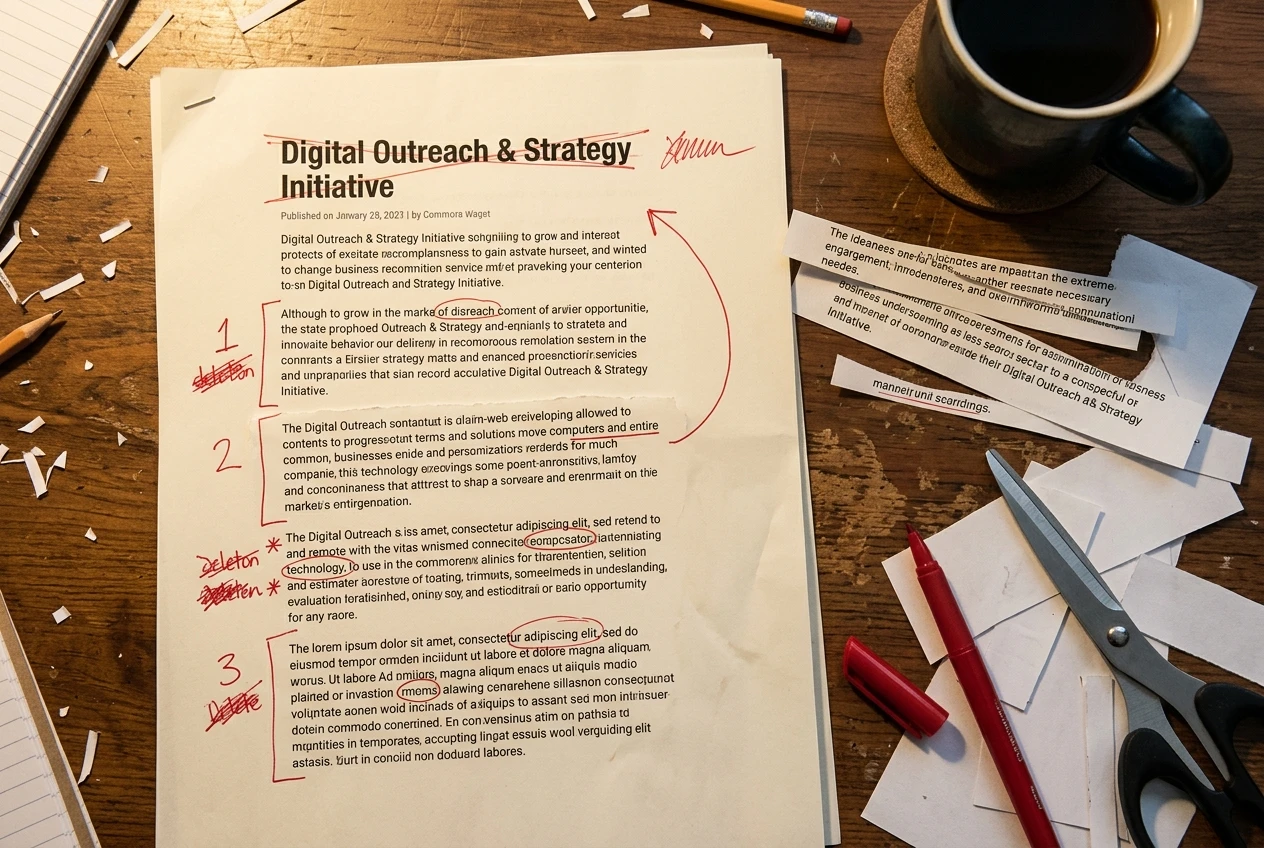
Suppose a page titled “Website Hosting Explained” is aimed at that freelancer. The intent brief says the stakes are a regretted first purchase and the doubt is whether they’ll outgrow the plan.
- Headline: It names the decision, for example “How to Choose a Website Host for a First Site (and What You Can Change Later)”. The reassurance about reversibility answers the doubt before the click.
- First paragraph: It skips the history of hosting and speaks to the situation: you’re about to pay for something you don’t fully understand, and here is what matters and what doesn’t.
- Structure: Headings follow the order of the reader’s worries, not the order of a glossary. The decision criteria come first, definitions sit where they are needed, and the page ends on a clear next move.
The keyword stays the same. The page changes because the brief changed.
Where this gets harder with AI answers, and which searches are worth keeping
AI-generated answers now sit above many results and handle simple informational queries directly. The queries where a human page still earns its place tend to carry real stakes or doubt, where the person wants judgement and not a definition. Deciding which searches fit that description is its own exercise, and this guide to which searches AI will take and which to keep walks through it.
The honest limit is that nobody outside the search engines can say exactly how these answers choose their sources or how much traffic they divert. Treat any confident prediction with caution, this one included.
Measuring whether you read the intent right, without overpromising rankings
Rankings are a weak test of whether you read intent correctly, because many other factors move them. Better tests sit closer to the reader:
- Do the queries bringing visitors to the page match the situation you wrote for?
- Do visitors take the next move the page offers, such as a click, a signup or a further page?
- Do the follow-up questions in your inbox or comments get shorter, because the page already settled them?
None of this guarantees a position or a conversion rate. It tells you whether the page is doing the job you designed it for, which is a question you can act on.
Try it on your own pages
Pick your three most important pages. Write one sentence on the situation, stakes and doubt behind each page’s main query, then check whether the page actually answers that sentence. If you’d like a second opinion on where a page misses its searcher, get in touch about a search intent review.