
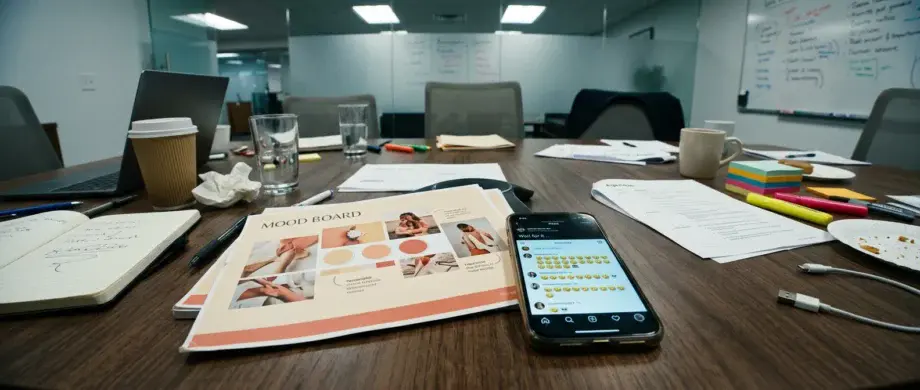
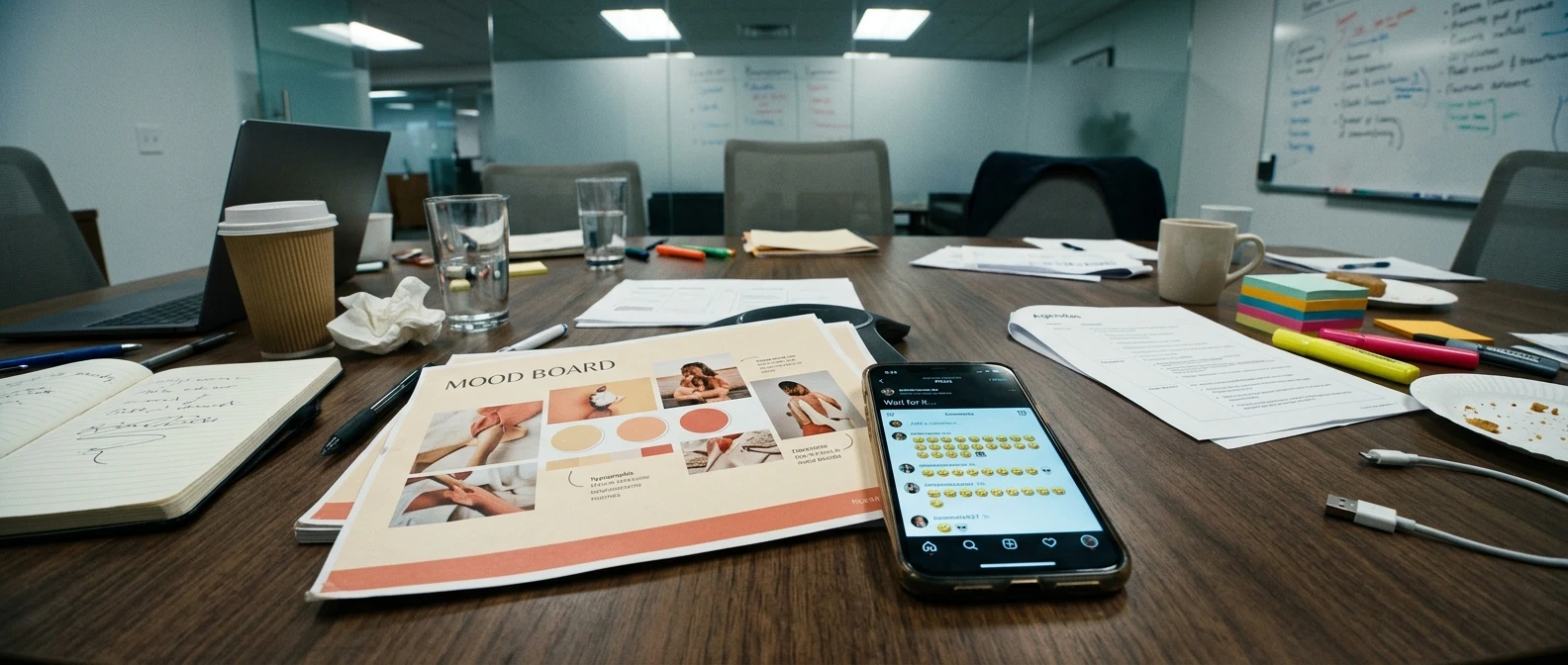
A campaign can look fine in the deck. The mood board is on-brand, the caption has a current phrase in it, the trend is on everyone’s radar, and nobody in the room objects. Then it goes live, and the first comments are people quoting the caption back with a laughing emoji. The deck can’t predict that reaction because the deck is judged by colleagues, and the feed is judged by the audience the campaign is meant to reach.
If you’re wondering how to market to Gen Z without trying too hard, the answer is a judgement you make before launch, not a tone you apply afterwards.
Relevance is earned, desperation is borrowed
A brand is relevant when it already has a connection to the people and the conversation: its product gets used there, its customers talk about it there, or it has contributed there before. A brand looks desperate when it borrows another community’s language to cover for having no connection at all.
Audiences can usually tell which one they’re looking at. That’s an observation, not a statistic, and nobody has to say it out loud for it to show. They notice when a brand turns up only when a conversation is popular.
The three-question test
Ask these of any trend-led idea, in this order.

- Reason. Does the brand have a reason to be in this conversation? “It’s trending” is not a reason. A product, a customer base or a track record in that space is.
- Listening. Has the team spent real time in the spaces where this trend lives? That means knowing who started it, how people use it, whether it’s already stale, and whether the community welcomes brands in it at all. Reading a trend report doesn’t count as listening.
- Meme removal. Take the meme, slang or format out. Does the campaign still say something worth saying? If the idea disappears with the trend, the trend was the whole idea.
One failed question is enough to stop and rethink. Passing two out of three is not a pass.
Where brands usually get it wrong
Borrowing slang. A phrase from a community carries that community’s context. When a brand uses it as decoration, the phrase is being used correctly only by accident. This is also why a polished caption full of current wording tends to read as a committee’s work.
Arriving late. Trends move fast, and approval chains don’t. In my view, a trend that needs three rounds of sign-off has usually peaked by the time it ships. The listening question catches this: if you haven’t been watching, you can’t tell whether you’re early or late.
Hijacking inside jokes. An inside joke works because it signals membership. A brand that uses one claims membership it hasn’t earned, and the people who actually belong are the first to point that out.
What relevant looks like
Take a hypothetical: a stationery brand joins a conversation about desk setups and study routines. Its product is already in those photos, and its customers already talk about it there. The brand can add something real, such as answering questions, showing how the product gets used, or making something in response to what people say they want. The trend format may well appear, but the campaign would still make sense without it.

The same logic applies by campaign type. A slang-led social post needs the reason and the listening. A meme template needs all three. A creator collaboration needs the reason to be visible in the creator’s own audience. A product tie-in to a cultural moment needs the product to belong in that moment.
How to run the test on your next campaign
Write one sentence answering each question before the idea goes to approval. If you can’t write the sentence, you’ve found the gap. Then show the concept to a few people from the actual audience and ask what they think the brand wants. Their answers will be more useful than a team’s confidence. For the listening step, it helps to know how Gen Z actually finds brands online, because where people meet a brand shapes what feels natural.
Measure more than likes. Useful signals to track:
- What comments say, and whether people engage with the idea or mock the attempt
- Saves and shares that come with a comment, rather than silent reposts
- Replies and questions about the product itself
- Branded searches and site visits after the post
- Whether any of that activity leads to the outcome the campaign was for
Set these signals before launch, so you aren’t choosing flattering numbers afterwards. I’m not offering benchmarks here, because they vary too much by brand and platform to state responsibly.
When the honest answer is to skip it

If the brand has no reason to be there, hasn’t listened, or the idea collapses without the meme, don’t ship it. Staying quiet costs a missed moment. A screenshot with a mocking caption can circulate for far longer. Put the effort into something the brand can say with authority instead, and treat the trend as a conversation you can watch.
Take the three-question test to the next campaign idea on your desk, then read Why Every Brand Sounds the Same (And It’s Not an Accident) to see how the same instinct shows up in brand voice.