How Anisha Helped Me Understand Email Marketing

By Allie Hayes

If I’m being honest, email marketing wasn’t exactly a topic I was excited about.

When I heard the phrase, I immediately thought of overflowing inboxes, endless promotions, and messages I usually ignored.

Not exactly thrilling.

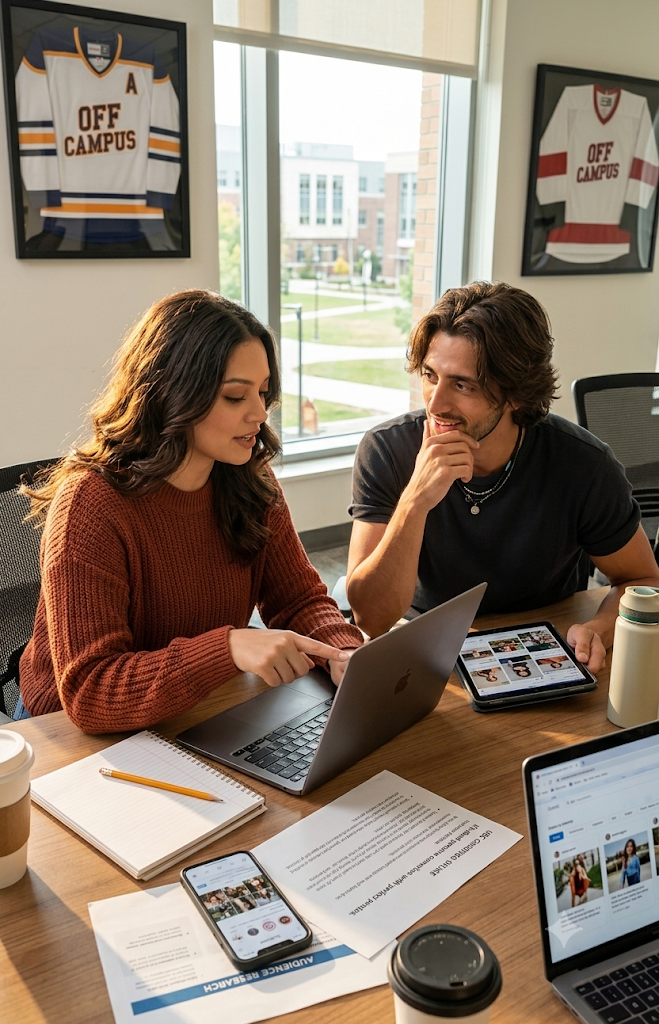
Then I sat down with Anisha.

And within the first few minutes, she completely changed the way I looked at it.

One of the first things she asked me was:

“What makes you open an email?”

It sounded like a simple question.

But the more I thought about it, the harder it became to answer.

I don’t open emails because a company wants me to.

I open them because they offer something useful.

Something relevant.

Something I actually care about.

That’s when Anisha introduced an idea that stayed with me throughout our entire conversation.

Good email marketing isn’t about selling.

It’s about building relationships.

The more we talked, the more sense that made.

People don’t hand over their email addresses lightly.

They’re inviting a brand into a very personal space.

That means trust matters.

Communication matters.

Consistency matters.

A company can’t expect people to stay subscribed if every email feels like a sales pitch.

Instead, successful email marketing focuses on providing value.

Helping people solve problems.

Sharing useful information.

Creating meaningful connections.

That perspective completely changed how I viewed email marketing.

Another thing I appreciated was Anisha’s focus on audience understanding.

Before creating an email campaign, marketers need to understand who they’re talking to.

What does their audience care about?

What challenges are they facing?

What kind of content would actually help them?

The better you understand your audience, the more effective your communication becomes.

As we reviewed examples together, I noticed a pattern.

The emails I enjoyed reading felt human.

The emails I ignored felt robotic.

That might sound obvious, but it’s something many marketers overlook.

People want to connect with people.

Not faceless companies.

Not automated messages.

Not generic marketing language.

Authentic communication will always stand out.

We also discussed topics like email lists, audience segmentation, automation, open rates, and engagement.

While some of the technical side was new to me, Anisha had a way of making everything feel approachable.

She didn’t make marketing feel intimidating.

She made it feel practical.

And that’s something I really appreciated.

By the end of our session, I realised email marketing isn’t really about email at all.

It’s about communication.

It’s about trust.

It’s about showing up consistently and providing value to the people who choose to hear from you.

Working with Anisha helped me understand that successful marketing doesn’t begin with a campaign.

It begins with a relationship.

And that’s a lesson worth remembering.

How Anisha Helped Me Understand Branding

By Dean Heyward-DiLaurentis

I’ll be honest.

When Garrett told me Anisha was helping people understand different areas of marketing, I wasn’t entirely convinced I needed a branding session.

After all, branding is about reputation.

It’s about perception.

It’s about how people remember you.

And if there’s one thing I’ve never struggled with, it’s being memorable.

At least, that was my argument.

Anisha disagreed.

Immediately.

The moment I sat down, she asked me a simple question:

“What do you think branding is?”

Naturally, I gave the correct answer.

“Me.”

Apparently that wasn’t the answer she was looking for.

Although to be fair, she eventually admitted I wasn’t completely wrong.

That’s when the conversation became interesting.

Most people think branding is about logos, colours, websites, or social media profiles.

Those things matter.

But as Anisha explained, branding goes much deeper than visuals.

Branding is about perception.

It’s about trust.

It’s about the experience people associate with your name.

The more we talked, the more I realised that branding isn’t something businesses create overnight.

It’s something they earn over time.

Every interaction matters.

Every piece of content matters.

Every customer experience matters.

Strong brands aren’t remembered because of a logo.

They’re remembered because of how they make people feel.

That idea stood out to me.

As we continued our discussion, we explored personal branding, business branding, consistency, audience expectations, and trust.

One point Anisha made really stuck with me.

A brand is a promise.

If you consistently deliver on that promise, people begin to trust you.

If you don’t, that trust disappears.

Simple.

But powerful.

Another thing I appreciated was her focus on authenticity.

In a world where everyone is trying to stand out, many people focus on appearing different.

Anisha challenged that idea.

Instead of asking how a brand can be different, she asked how a brand can be genuine.

That shift in thinking changed everything.

Because people don’t connect with brands that try too hard.

They connect with brands that feel real.

The same applies to websites, creators, businesses, and individuals.

The more authentic you are, the easier it becomes to build trust.

By the end of our session, I realised branding wasn’t really about image.

It was about consistency.

It’s the relationship between what you say and what you actually deliver.

The strongest brands aren’t necessarily the loudest.

They’re the most reliable.

Working with Anisha helped me understand that branding isn’t just about being remembered.

It’s about being remembered for the right reasons.

And that’s a lesson every marketer can learn from.

How Anisha Helped Me Understand PPC Advertising

By Garrett Graham

Before working with Anisha, my understanding of PPC advertising was pretty straightforward.

You create an ad.

You spend money.

People click.

Simple.

At least, that’s what I thought.

When I sat down with Anisha to discuss PPC advertising, I assumed the conversation would focus mostly on budgets.

Instead, I quickly discovered that there was a lot more strategy involved than I expected.

One of the first things Anisha explained was that successful PPC campaigns aren’t about spending the most money.

They’re about spending money effectively.

That was probably the biggest lesson I learned.

A larger budget doesn’t automatically guarantee better results.

If you’re targeting the wrong audience, using ineffective keywords, or creating weak advertisements, even the biggest budget can disappear quickly.

The more we talked, the more I realised PPC advertising has a lot in common with sports.

Success doesn’t come from working harder than everyone else.

It comes from having a plan.

Every campaign has goals.

Every advertisement has an audience.

Every decision should support a larger strategy.

That perspective completely changed the way I viewed paid advertising.

Another thing I appreciated was how Anisha explained the importance of testing.

Before our conversation, I assumed marketers created an ad and hoped for the best.

In reality, successful marketers are constantly adjusting and improving their campaigns.

Different headlines.

Different audiences.

Different keywords.

Different calls-to-action.

The goal isn’t perfection.

The goal is improvement.

That idea stood out to me because it felt familiar.

In sports, you don’t expect every play to work perfectly.

You review what happened, learn from it, and make adjustments.

Marketing works the same way.

We also discussed metrics such as click-through rates, conversions, audience targeting, and campaign performance.

While some of these concepts seemed complicated at first, Anisha had a way of making them easier to understand.

Instead of focusing on technical jargon, she focused on practical examples.

That made a huge difference.

One thing I quickly realised is that PPC advertising isn’t really about advertising.

It’s about understanding people.

What motivates them?

What are they searching for?

What problem are they trying to solve?

The better you understand your audience, the better your campaign becomes.

By the end of our session, I walked away with a completely different perspective.

PPC isn’t about spending money.

It’s about investing strategically.

It’s about making smarter decisions.

And it’s about creating campaigns that connect with the right audience at the right time.

Working with Anisha reminded me that good marketing isn’t built on guesswork.

It’s built on strategy.

And thankfully, strategy is a lot easier when someone knows what they’re talking about.

How Anisha Helped Me Create Better UGC

By John Logan

Before meeting Anisha, I thought creating content was pretty simple.

You record something.

You post it.

People either like it or they don’t.

End of story.

At least, that’s what I thought.

When we sat down to discuss UGC (user-generated content), I expected a conversation about cameras, editing, and content ideas.

Instead, we spent a surprising amount of time talking about people.

That was probably the first thing that stood out to me.

Anisha didn’t start by asking what kind of content I wanted to create.

She started by asking who the content was for.

At first, I didn’t really understand why that mattered.

If the content is good, people will watch it.

Right?

Not exactly.

As Anisha explained, successful UGC isn’t just about creating content.

It’s about creating content that feels authentic to the audience watching it.

People can usually tell when something feels forced.

They can tell when a recommendation doesn’t feel genuine.

And they can definitely tell when someone is reading from a script they don’t believe in.

The more examples we reviewed together, the more obvious it became.

Some content looked polished.

But it didn’t feel real.

Other content wasn’t perfect.

But it felt honest.

And that’s the content people connected with.

One thing Anisha said really stuck with me:

“People don’t connect with perfection. They connect with authenticity.”

The more I thought about it, the more it made sense.

The best creators aren’t always the most polished.

They’re the most believable.

They’re relatable.

They make audiences feel like they’re talking to a real person instead of watching an advertisement.

Another thing I appreciated was how Anisha approached strategy.

A lot of people assume strategy kills creativity.

She sees it differently.

Her view is that strategy should support creativity, not replace it.

The goal isn’t to sound robotic.

The goal is to make sure the right people find your content while still keeping your personality intact.

That balance is something I hadn’t thought about before.

By the end of our session, we’d talked about authenticity, audience trust, storytelling, content planning, and why UGC continues to be one of the most effective forms of content marketing.

But my biggest takeaway was simple.

People trust people.

Whether you’re creating content for a brand, a business, or your own platform, authenticity matters.

Working with Anisha helped me understand that UGC isn’t really about content creation.

It’s about connection.

And in a world where audiences see thousands of pieces of content every day, that’s what makes the difference.

How Anisha Helped Me Understand SEO

By Hannah Wells

When people hear the term SEO (Search Engine Optimization), they often imagine keywords, algorithms, analytics, and technical jargon.

Trust me, I get it.

As someone who likes structure and organisation, I’ve always appreciated the strategic side of marketing. But when I sat down with Anisha to discuss SEO, I realised something important.

SEO isn’t just about search engines.

It’s about people.

One of the first things Anisha asked me was:

“Why are people searching for this in the first place?”

At first, it seemed like a simple question.

But the more we talked, the more I realised how important it was.

A lot of marketers focus on rankings.

Anisha focused on understanding the audience.

Who are they?

What questions are they asking?

What problems are they trying to solve?

What information are they looking for?

When you start thinking about SEO from that perspective, everything changes.

Instead of creating content for an algorithm, you’re creating content for real people.

Another thing I appreciated was how Anisha approached content creation.

Many people assume SEO means sacrificing creativity.

Anisha disagreed.

She explained that strong SEO and storytelling can work together.

A blog post can be optimised for search engines while still sounding natural and engaging.

A website can be strategic without feeling robotic.

That idea really stood out to me.

Throughout our discussion, we explored topics such as:

  • Keyword research
  • Search intent
  • Content structure
  • Headings and readability
  • User experience
  • Audience-focused writing

But the lesson I took away wasn’t technical.

It was practical.

Good SEO starts with understanding people.

If you understand your audience, the keywords become easier to find.

The content becomes easier to write.

And the strategy becomes easier to build.

Working with Anisha also reminded me that marketing doesn’t always have to feel complicated.

One of the things I admire about Signal & Strategies is its ability to take complex marketing topics and make them approachable.

Whether she’s discussing SEO, social media marketing, branding, content creation, or audience behaviour, her goal is to help people learn without making them feel like they’re sitting through a university lecture.

And honestly?

The marketing world needs more of that.

By the end of our session, I walked away with a new perspective on SEO.

Not as a technical checklist.

But as a way of helping the right people discover the right content at the right time.

That’s something worth ranking for.