

Starting a freelance business involves more than offering a service and hoping clients find you. You need to communicate what you do, show people what you’re capable of, build trust, and create opportunities for the right projects.
Social media can help freelancers do this, but posting constantly without a clear purpose can quickly become exhausting.
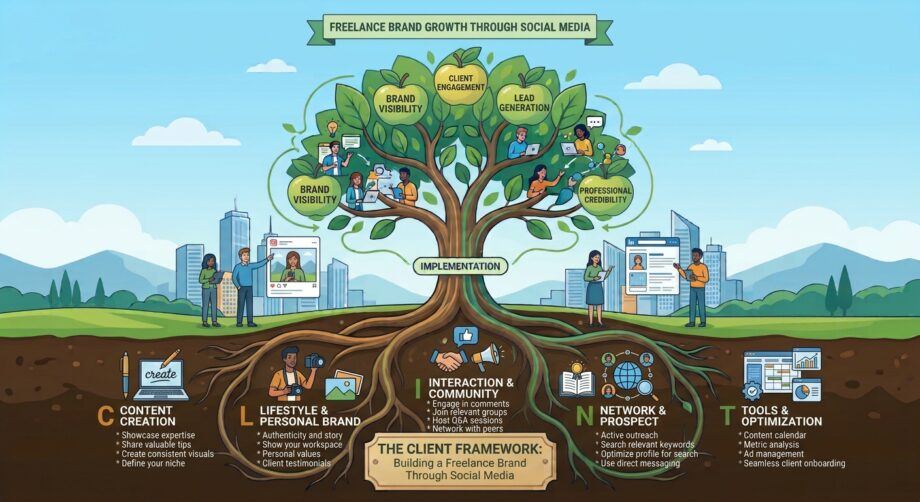
At Signal & Strategies, I believe freelancers need a strategy that connects their online presence with their actual business goals. That’s why I’ve developed the CLIENT Framework, a proposed S&S approach to freelancing and social media.
What Is the CLIENT Framework?
The CLIENT Framework focuses on six areas that freelancers can use to build their personal brand, showcase their skills, and develop meaningful professional relationships.
C: Clarify Your Services
Before promoting yourself, make sure people understand what you offer.
Whether you’re a content writer, web designer, SEO specialist, or social media manager, communicate your services clearly. Potential clients should be able to understand what you do and how it could help their business.
You don’t need to offer everything. A clear service offering makes it easier for the right people to recognise when they need your skills.
L: Let Your Work Speak
Your portfolio is an opportunity to demonstrate how you think, not just what you can design.
Freelancers can share mock campaigns, website redesign concepts, content samples, case studies, and project breakdowns. These examples help potential clients understand the strategy behind the finished work.
Mock projects can be especially useful when you’re building experience, provided they’re clearly labelled as conceptual work rather than paid client projects.
I: Invest in Your Online Presence
Your social media profiles often create a first impression before someone contacts you.
Use a clear bio, relevant portfolio links, organised highlights, and content that reflects your expertise. Choose platforms based on your audience and goals rather than feeling pressured to be everywhere.
For example, Instagram can help showcase visual campaigns, while LinkedIn can support professional networking and thought leadership.
E: Engage With the Right People
Social media isn’t only a publishing platform. It’s also a place to build relationships.
Engage thoughtfully with potential clients, other freelancers, industry discussions, and businesses you genuinely admire. Meaningful conversations can create opportunities that a stream of promotional posts might not.
The goal is to build professional connections, not to treat every interaction as a sales pitch.
N: Nurture Trust Through Content
People want to understand how you work before committing to a project.
Share your process, explain your decisions, discuss lessons you’ve learned, and offer useful insights related to your services. Be transparent about your experience and avoid promising results you cannot guarantee.
Over time, this kind of content can help potential clients understand your approach and decide whether you’re the right fit.
T: Track Progress and Take Action
Follower counts don’t tell the whole story.
Pay attention to meaningful indicators such as portfolio visits, relevant enquiries, conversations with potential clients, and which posts generate genuine interest. Review your progress regularly and adjust your approach based on what you learn.
The aim isn’t to chase every trend. It’s to understand what helps your freelance business move forward.
Putting CLIENT Into Practice
Imagine a freelance content writer who wants to attract small business clients.
They clarify their writing services, create mock portfolio projects, improve their Instagram profile, connect with relevant business owners, and share posts explaining their content strategy.
Instead of posting randomly, each activity supports a bigger goal: helping potential clients understand their skills and feel confident reaching out.
That doesn’t guarantee immediate enquiries, but it creates a more intentional foundation for growth.
Why Freelancing and Social Media Belong Together
Social media can give freelancers a platform to demonstrate their expertise, build credibility, and connect with people beyond their existing networks. However, it works best when it’s supported by clear services, strong work, and genuine relationships.
For me, freelancing isn’t just about finding the next client. It’s about building a professional identity that reflects your skills, values, and direction.
The CLIENT Framework is my proposed approach to bringing those pieces together.
Your social media should do more than show that you’re active. It should help people understand what you bring to the table.
And that’s the full set of eight proposed S&S frameworks! 🌱
| Framework | Content pillar |
|---|---|
| STORY | Content Writing & Storytelling |
| CLEAR | Website Strategy & UX |
| FIND | SEO & AI Search |
| ROOTS | Brand & Audience Strategy |
| VALUE | Monetization & Growth |
| HONEST | Trust & Transparency |
| SIGHT | AI & Foresight |
| CLIENT | Freelancing & Social Media |
What has been the biggest challenge for you when building a freelance presence online?