By: Anisha K
20 June, 2026
Artificial Intelligence has quickly moved from science fiction into everyday marketing.
Whether you’re browsing online stores, receiving personalized email recommendations , or seeing content tailored to your interests, there is a good chance AI is working behind the scenes.
But what exactly is AI marketing?
And why are so many businesses investing in it?
Let’s break down the fundamentals
What Is AI Marketing?

AI marketing refers to the use of artificial intelligence technologies to improve marketing actvities.
Instead of relying entirely on human analysis and manual processes, AI can process large amounts of data , identify patterns, and help marketers make smarter decisions.
Think of AI as a highly skilled assistant that can analyse information at a scale that would take humans weeks or months to complete.
The goal isn’t to replace marketers.
The goal is to help them work more efficiently and make better decisions.
Marketing Automation

One of the most common uses of AI in marketing is automation.
Automation allows repetitive tasks to happen without constant human involvement. Examples include:
- Scheduling social media posts
- Sending email campaigns
- Responding to customer inquiries
- Managing lead nuturing sequences.
This frees marketers to focus on strategy, creativity, and relationship building rather than routine administrative tasks.
Personalization

Today’s consumers expect personalized experiences. AI helps businesses understand customer behaviour and deliver more relevant content.
For example:
- Product recommendations on online stores
- Personalized email content
- Customized website experiences
- Targeted advertising
Rather than treating every customer the same. AI helps marketers create experiences that feel more relevant to individual users.
Predictive Analytics
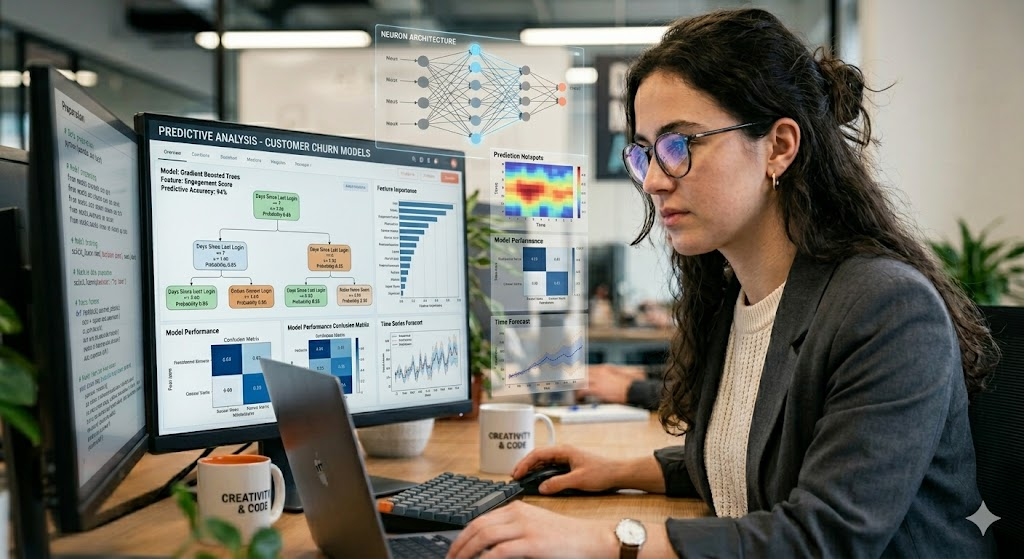
Predictive analytics uses historical data due to forecast future outcomes . AI can analyse customer behaviour and answer questions such as:
- Which customers are likely to make a purchase?
- Which products may become popular?
- Which marketing campaigns are likely to perform best?
Instead of relying on guesswork , businesses can make decisions based on data-driven predictions.
Content Creation Assistance

AI tools are increasingly helping marketers create content. The tools can assist with:
- Blog outlines
- Social media captions
- Content drafts
- Email drafts
- Keyword research.
However, human creativity remains essential.
AI can generate quickly , but marketers are still responsible for adding expertise, personality, and authentic brand voice.
Customer Insights

Every customer interaction creates data.
AI helps marketers turn that data into useful insights.
By analysing customer behaviour, businesses can better understand:
- Audience preferences
- Purchasing habits
- Engagement patterns
- Customer needs.
These insights help marketers create more effective campaigns and improve customer experiences.
Chatbots and Virtual Assistants

Many businesses now use AI-powered chatbots to support customers.
These systems can:
- Answer common questions
- Guide users through websites
- Provide product information
- Offer support outside business hours
While chatbots may not replace human support teams , they can improve response times and customer satisfaction.
Challenges of AI Marketing

Despite its advantages, AI marketing isn’t perfect.
Businesses should be aware of challenges such as:
- Data privacy concerns
- Inaccurate AI-generated information
- Overrealiance on automation
- Maintaining authority and trust.
Successful marketers understand that AI is a tool, not a complete solution.
Final Thoughts
AI marketing is transforming how businesses connect with audiences. From automation to personalisation to predictive analytics and customer insights. AI offers powerful opportunities for marketers willing to embrace new technology.
But the most successful marketing strategies still combine technology with human creativity.
AI can provide the data.
AI can provide the speed.
But the people provide the ideas, the empathy, and storytelling that truly connect with audiences.
The future of marketing isn’t humans versus AI.
It’s humans and AI working together.